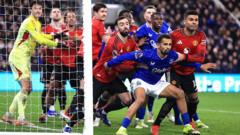
Stop calling it "clever defending." For the last few years, watching a Premier League corner has felt less like a football match and more like a grappling tournament. Defenders have been getting away with full-nelson holds, shirt-tugging, and rugby-style takedowns while the referee watches from six yards away.
The league has finally decided enough is enough.
If you’ve been frustrated by the cynical dark arts turning set pieces into a chore, you’re not alone. Howard Webb and the officiating team have sent a clear directive to referees for the 2026-27 season. They are targeting "non-footballing holding actions"—those specific moments where a player has zero interest in the ball and everything to do with stopping an opponent from moving.
The Real Problem With Corner Tactics
Last season, set-piece goals accounted for a staggering 25.7% of all goals scored in the Premier League. That is a record-breaking statistic. When you have teams like Arsenal turning set-piece efficiency into a title-winning weapon, the rest of the league pays attention. They copy what works.
The copycat effect is why we saw the increase in "wrestling" last season. It worked because referees were too hesitant to intervene. It’s hard to blame the players for exploiting a loophole when the reward is a game-winning goal.
However, the game has suffered. When defenders treat an attacker’s jersey like a handle, they aren't playing football. They're stalling. They're baiting. They're hoping the chaos inside the box prevents the official from seeing the foul. The new guidance isn't about removing physical contact entirely—because nobody wants to see a game without strength—it's about stripping out the cynical, non-footballing obstructions.
What Actually Changes on the Pitch
You might be wondering if this will lead to a penalty shootout every weekend. Will every slight tug result in a whistle?
Not necessarily. The league is holding firm on the "high threshold" for fouls. They don't want to turn the sport into a non-contact exhibition. The focus is specifically on:
- Players using both arms to wrap up an opponent.
- Defenders who don’t look at the ball, only at their man, while impeding their run.
- Persistent tugging that serves no purpose other than to stop a forward from reaching their spot.
Referees are now encouraged to be proactive. Instead of letting the incident play out and then arguing about it in the VAR room for three minutes, they’re being told to act decisively. If you see it, penalize it. Fewer warnings, more consequences.
The Impact on Clubs
This shift forces a massive tactical rethink. If you’re a team that built your entire defensive identity on "blocking" attackers away from the ball, you have a problem. You’re going to have to learn to defend with your feet and your body position rather than your hands.
We saw Brighton’s manager, Fabian Hürzeler, go as far as bringing in an MMA fighter to help his squad understand how to handle the physicality of these situations. That’s how serious this had become. Now, that same MMA-style physicality might actually be a liability if it crosses the line into a clear hold.
The Bigger Picture
Don't expect overnight perfection. Referees are human, and applying these rules in a split second inside a crowded box is notoriously difficult. There will still be moments where a grab is missed. There will still be fans shouting for penalties that aren't given.
But the intent is clear. The Premier League wants to move away from the cynical manipulation of set pieces. If the officiating remains consistent, we should see cleaner movement, more genuine aerial duels, and perhaps a slight dip in the "rugby" style defending that defined the previous campaign.
If you’re watching this weekend, keep an eye on the defensive lines. Watch how the markers set themselves up. If you see fewer arms wrapped around necks and more focus on tracking the flight of the ball, the crackdown is working.
The era of the unchecked wrestling match is ending. It’s time to see who can actually defend without cheating. Pay attention to how the mid-table teams adjust in the first month—that’s where you’ll see the biggest strain on these new directives. If they can’t adapt, they’ll be giving away penalties at an alarming rate. It’s a simple fix, really: stop holding, start playing.