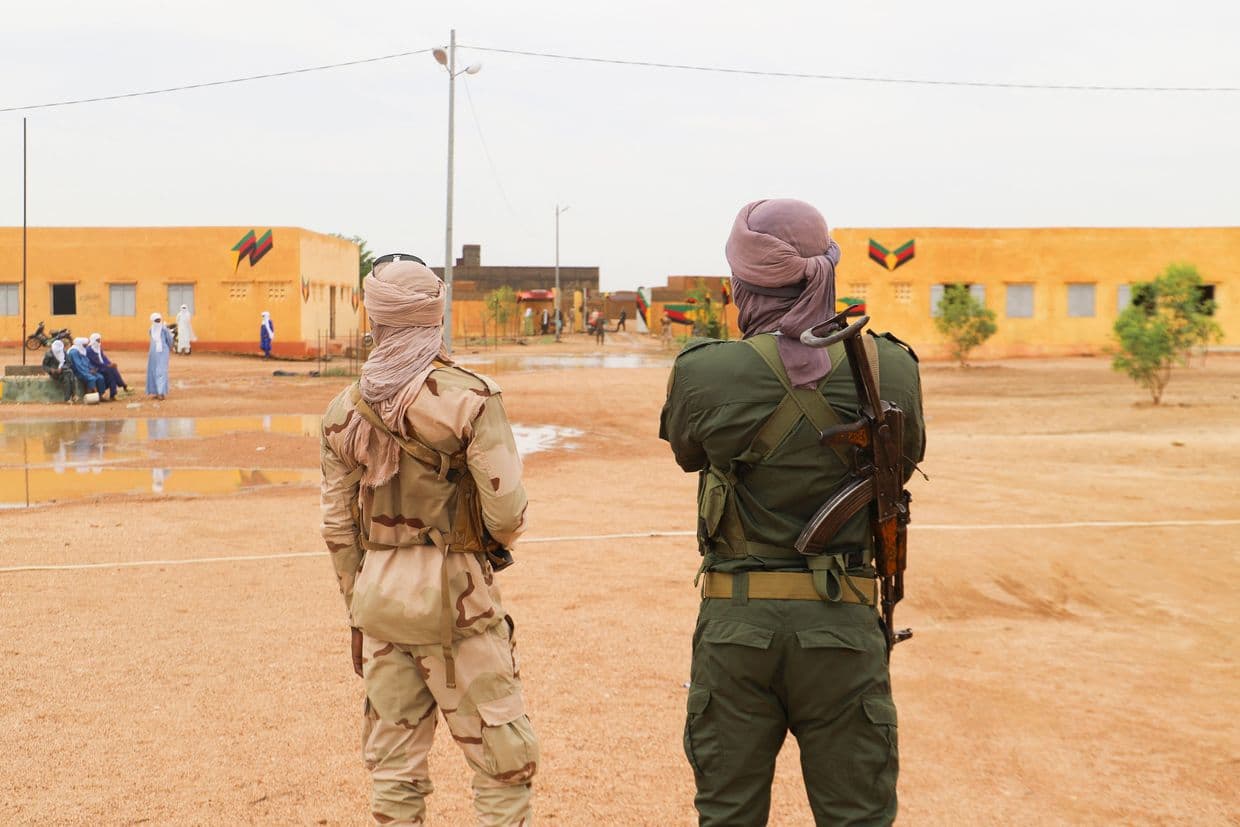
Another wave of captives is heading home. Tuareg rebels have freed about 60 Malian soldiers in exchange for Inkinane Ag Attaher, a high-ranking rebel leader and former Malian army officer who defected. This deal didn't just happen in a vacuum. It was brokered and overseen in neighboring Niger, highlighting how regional geopolitics in the Sahel are shifting beneath our feet.
If you look closely at Mali's ongoing war, prisoner swaps aren't just humanitarian gestures. They are tactical moves in a much larger, bloodier chessboard. For a deeper dive into similar topics, we suggest: this related article.
The High-Value Swap and the Return of Inkinane Ag Attaher
Let’s talk about who was actually traded here. Inkinane Ag Attaher isn't just any insurgent. He’s a former Malian army officer who turned his back on Bamako to join the Tuareg-led Azawad Liberation Front (FLA). Nigerian security forces grabbed him back in 2025 near the border, accusing him of managing drone training, coordinating deadly assaults, and acting as an international coordinator for the rebellion.
When the FLA demanded his release, they held leverage: roughly 60 Malian soldiers captured during bitter desert skirmishes. For further background on this development, in-depth analysis can also be found at NBC News.
Instead of an outright military victory, the junta in Bamako had to accept a trade. Nigerien authorities handled the logistics of moving the troops across the border to complete the exchange. This dynamic shows that regional neighbors are pulling the strings behind the scenes.
Why Regional Alliances Are Shifting Right Now
You can't understand these prisoner swaps without looking at Mali’s broader foreign policy disaster. Since the military junta seized power in the 2021 coup, they’ve systematically burned bridges with traditional Western partners. They kicked out French forces and threw out thousands of United Nations peacekeepers. In their place, they brought in Russian paramilitaries—first the Wagner Group, and later its successor, Africa Corps.
Did it work? Not really. The security situation has deteriorated. Insurgents from the FLA and the al-Qaeda-linked coalition Jama'at Nusrat al-Islam wal-Muslimin (JNIM) continue to launch devastating coordinated attacks across the northern desert.
Even so, cracks are appearing in the diplomatic freeze. Just recently, Mali's Prime Minister Abdoulaye Maiga flew to Algiers to patch things up with Algeria after a yearlong diplomatic rift. Algeria has quietly stepped up mediation efforts to free captured soldiers and stabilize its volatile southern border.
What the Junta Says vs. Reality on the Ground
Mali’s military leadership loves to project strength. General Elisee Jean Dao, the chief of the general staff, recently warned enemies that the army will hunt them down until they lay down their weapons. He urged Malian rebels to take advantage of the state's peace process, repeating the line that the door is still open.
Yet, releasing scores of soldiers in exchange for a top rebel commander tells a different story. The junta is stretched thin. They are fighting a multi-front war against both secular nationalists and jihadists who have found common ground against Bamako, despite their deep ideological differences.
Expect more backroom deals. As long as the northern insurgency retains high-value prisoners and receives backing from opportunistic alliances, the Malian military will have to negotiate behind closed doors while maintaining a tough public posture. Keep an eye on Niger and Algeria. They hold the keys to whatever fragile peace comes next in the Sahel.