Two men died on an Iranian gallows Tuesday morning. Their names were Mohieddin Abdollahi and Hossein Palani. Iranian state television announced the hangings with the usual cold, bureaucratic efficiency. The official charge was armed rebellion against the Islamic Republic.
To the casual observer, it looks like a standard counter-terrorism press release. Tehran wants you to think its security forces have everything under control. They don't.
This specific execution exposes a massive, bleeding wound in Iran’s border security. It shows how the remnants of the Islamic State are quietly rebuilding in the rugged mountains separating Iran and Iraq. It also reveals how an increasingly rattled Iranian government is using the gallows as its primary tool of survival. If you want to understand what is actually happening inside Iran right now, you have to look past the state-vetted headlines.
What Happened in the Bamo Mountains
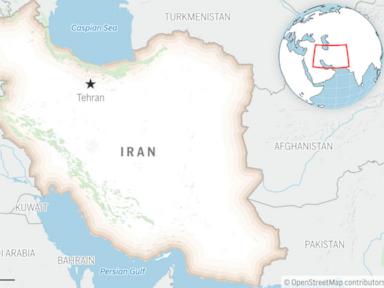
The official story says that Abdollahi and Palani belonged to an Islamic State cell that formed right after the terrorist group lost its main territories in Iraq and Syria. Iranian intelligence claims they tracked this specific cell to a hideout in the Bamo mountain area. Bamo is a brutal, jagged piece of terrain sitting right on the border with Iraq.
It is the perfect place to hide. It is an even better place to launch a guerrilla war.
When the Iranian Revolutionary Guard cornered the cell, a savage firefight broke out. Several militants died. The Revolutionary Guard lost three of its own men. Abdollahi and Palani were captured alive, stripped of their weapons and ammunition, and thrown into a judicial system designed to kill them.
The Supreme Court quickly upheld their death sentences. The judiciary will not even say where the hangings took place. They just want the public to know the state won.
This entire episode highlights a terrifying reality for Tehran. The Islamic State is no longer just a distant threat operating out of the Syrian desert or the Afghan mountains. They are inside the wire. They are setting up permanent shops in the borderlands, recruiting local cells, and stockpiling military-grade gear. The fact that three Revolutionary Guard members died in a single raid tells you everything you need to know about how well-armed these cells actually are.
Inside the Iranian Judicial Machine
If you get arrested on security charges in Iran, you are already dead. The legal process is a theatrical performance where the verdict is written before the trial starts.
Abdollahi and Palani were convicted of baghi, an Islamic legal term meaning armed rebellion against a legitimate Islamic ruler. In Iran, this carries a mandatory death sentence. The trials happen behind the closed doors of the Revolutionary Courts. These courts do not follow standard international legal norms. They do not even follow their own constitution most of the time.
Defenders do not get independent lawyers. They get state-appointed attorneys who often spend more time scolding their clients than defending them. The evidence used to convict these men almost always hinges on forced confessions. Iranian intelligence agencies routinely use psychological pressure, prolonged solitary confinement, and physical torture to get the exact statements they want. Once that confession is signed, the Supreme Court rubber-stamps the execution order.
Human rights organizations have watched this process play out thousands of times. Iran is the world’s second most prolific executioner, trailing only China. The regime relies on speed. They fast-track these trials to project strength and terrify anyone else who might think about taking up arms against the state.
Why Tehran is Escalating Executions Right Now
To understand why these two specific hangings happened on a Tuesday in July, you have to look at the larger map. Iran is currently suffocating under massive internal and external pressures.
The country is still reeling from the massive nationwide protests that erupted over economic mismanagement, runaway inflation, and political stagnation. The government responded to those protests with raw, lethal violence. Thousands of citizens ended up in prison. Dozens of political dissidents and protesters have already been sent to the gallows over the last few months.
On top of the internal unrest, Iran is managing the fallout from direct military engagements with foreign adversaries. The state is on high alert. The intelligence apparatus is paranoid. Anyone who challenges the state's monopoly on violence is seen as an existential threat that must be physically eliminated.
Executing Islamic State members allows the government to accomplish two things at once. First, it lets them look like the defenders of regional stability. They can tell the world they are fighting brutal Sunni extremists. Second, it sends a chilling warning to domestic opposition groups. The message is clear. If you take up arms, or if you even protest too loudly, the state will hang you without a second thought.
The lines between counter-terrorism and political repression have completely blurred. The judiciary is using the exact same legal charges against secular political activists that they use against radical religious extremists. It is a blanket strategy designed to crush dissent across the entire political spectrum.
The Regional Fallout of a Resurgent Threat
The Bamo mountain raid proves that the territorial defeat of the Islamic State did not actually kill the movement. It just forced it to mutate.
The cell that Abdollahi and Palani belonged to was highly organized. They were not lone wolves browsing radical forums online. They were a structured military unit operating in a strategic border corridor. This border area is notoriously porous. Smuggling networks have operated through these mountains for decades, moving everything from fuel and cigarettes to heavy weaponry.
Islamic State planners are capitalizing on this lack of governance. They use the chaotic border dynamics to move operatives between Iraq and Iran, completely evading the security forces of both countries.
For regional neighbors, this is a nightmare scenario. A destabilized Iran means a more dangerous Middle East. If the Iranian security state is too busy fighting its own population to secure its borders, extremist groups will fill the vacuum. We are seeing the early warning signs of that shift right now.
How to Track the Real Situation on the Ground
If you are trying to analyze the security situation in the region, you cannot rely on state media broadsheets. You have to look for specific, actionable indicators that tell you what is actually happening.
First, watch the casualty reports of the Islamic Revolutionary Guard Corps. State media will always try to bury these or frame them as tragic accidents. When you see multiple officers dying in specific border regions like Bamo, it means the state is losing control of its frontiers.
Second, monitor the execution rates coming out of the Iranian judiciary. A sudden spike in executions usually correlates with rising internal panic within the government. The gallows are a barometer for the regime's insecurity.
Do not expect the executions of Mohieddin Abdollahi and Hossein Palani to bring peace to the borderlands. Hangings do not solve the deep economic deprivation, ethnic marginalization, and political rot that allow extremist cells to recruit in these remote mountains. Until Tehran addresses those systemic issues, more cells will form in the peaks, more soldiers will die in the valleys, and the gallows will keep busy.