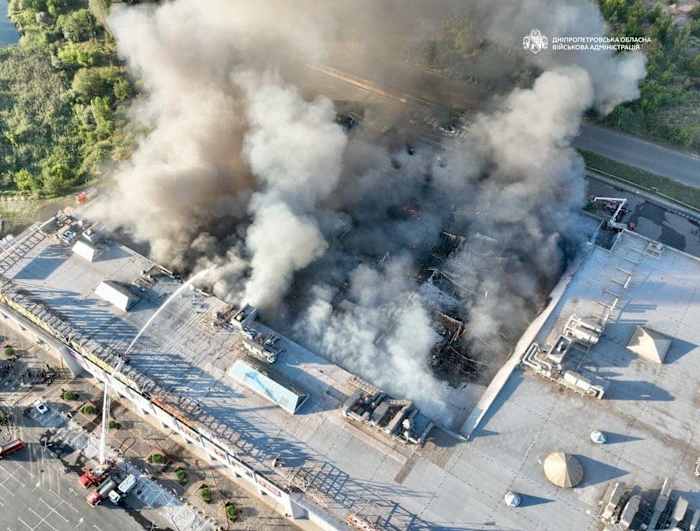
Air raid sirens don't stop the clock in Ukraine, but they dictate every single second of life. When a string of brutal Russian drone and ballistic missile strikes tore through civilian areas, leaving dozens dead and countless wounded, it became clear that the baseline of violence in this conflict had shifted again.
If you look past the standard headlines, the real story isn't just about numbers. It's about a systematic campaign designed to break infrastructure, exhaust air defense systems, and bring the front lines straight to commercial centers where people are just trying to buy groceries.
The Reality Behind the Kryvyi Rih Shopping Mall Attack
The tactical shift hit a horrific peak when Russian drones targeted the largest shopping center in Kryvyi Rih, President Volodymyr Zelenskyy's hometown. This wasn't a random stray projectile. Local authorities and emergency services confirmed a double-tap strike strategy—an initial wave of drones hit the commercial complex, followed quickly by a second wave explicitly designed to kill the first responders and rescue workers rushing into the flames.
The fire swallowed roughly 9,000 square meters of commercial space. By the time the smoke cleared, the death toll climbed to 16, with over 130 people wounded, including dozens of children. Nine people remained missing under the rubble.
Why target a crowded shopping mall in a central Ukrainian city? Military analysts point to a calculated effort to erode civilian morale and exploit critical gaps in Ukraine's defensive grid. The strategy relies on overwhelming remaining air defenses, particularly as stockpiles of Western-supplied interceptors run thin.
Escalation Across Kyiv and Regional Outposts
The assault on Kryvyi Rih did not happen in a vacuum. It came hot on the heels of a massive nighttime aerial bombardment that pounded Kyiv with scores of missiles and drones, killing 16 people in a single night. Days blur together into a terrifying rhythm of impact and recovery.
Consider the wider geographic spread of these recent strikes:
- Ballistic missiles targeted railway infrastructure and locomotive depots in the capital, cutting off critical transport lifelines.
- Regional attacks in Mykolaiv and Kharkiv claimed the lives of families, including young children and elderly residents sitting in their homes.
- Overnight drone hits in Zaporizhzhia left transit minibuses burning and civilian villages shattered.
The United Nations recently noted that Kyiv has become one of the most hazardous urban environments in the region, recording hundreds of civilian casualties in a single month. The safety net is shrinking. When air defense systems cannot cover every square mile, civilians pay the price with their lives.
The Transformed Shape of Cross-Border Retaliation
Ukraine isn't just absorbing the blows. The architecture of the conflict has expanded deep inside Russian territory, proving that distance no longer guarantees safety for Moscow's logistics network.
Long-range Ukrainian drone strikes have targeted strategic assets thousands of kilometers from the border. Oil refineries in Perm and Samara, along with military airfields in Volgograd and major commercial logistics hubs like Ozon and Wildberries, are increasingly catching fire. These operations are designed to create domestic fuel shortages inside Russia and force the Kremlin to reconsider the economic cost of its ongoing campaign.
Yet, retaliatory strikes come with their own human toll on the other side. Recent Ukrainian drone activity in Russia's Krasnodar and Belgorod regions has resulted in civilian casualties, including children, demonstrating that the geographical expansion of drone warfare brings danger to non-combatants on both sides of the border.
What Comes Next for the Civilian Population
As the war grinds past its fourth year of full-scale escalation, the immediate future looks bleak for anyone living within range of a Shahed drone or a ballistic missile. The international community continues to debate supply lines and air defense packages, but hardware delivery timelines rarely match the speed of daily bombardment.
If you're following these developments, don't look at them as isolated tactical skirmishes. They represent a grinding war of attrition where urban infrastructure, shopping malls, and railway hubs are treated as legitimate leverage. Survival depends entirely on early warning networks, underground shelters, and the sheer resilience of emergency services working under constant threat of a second wave.