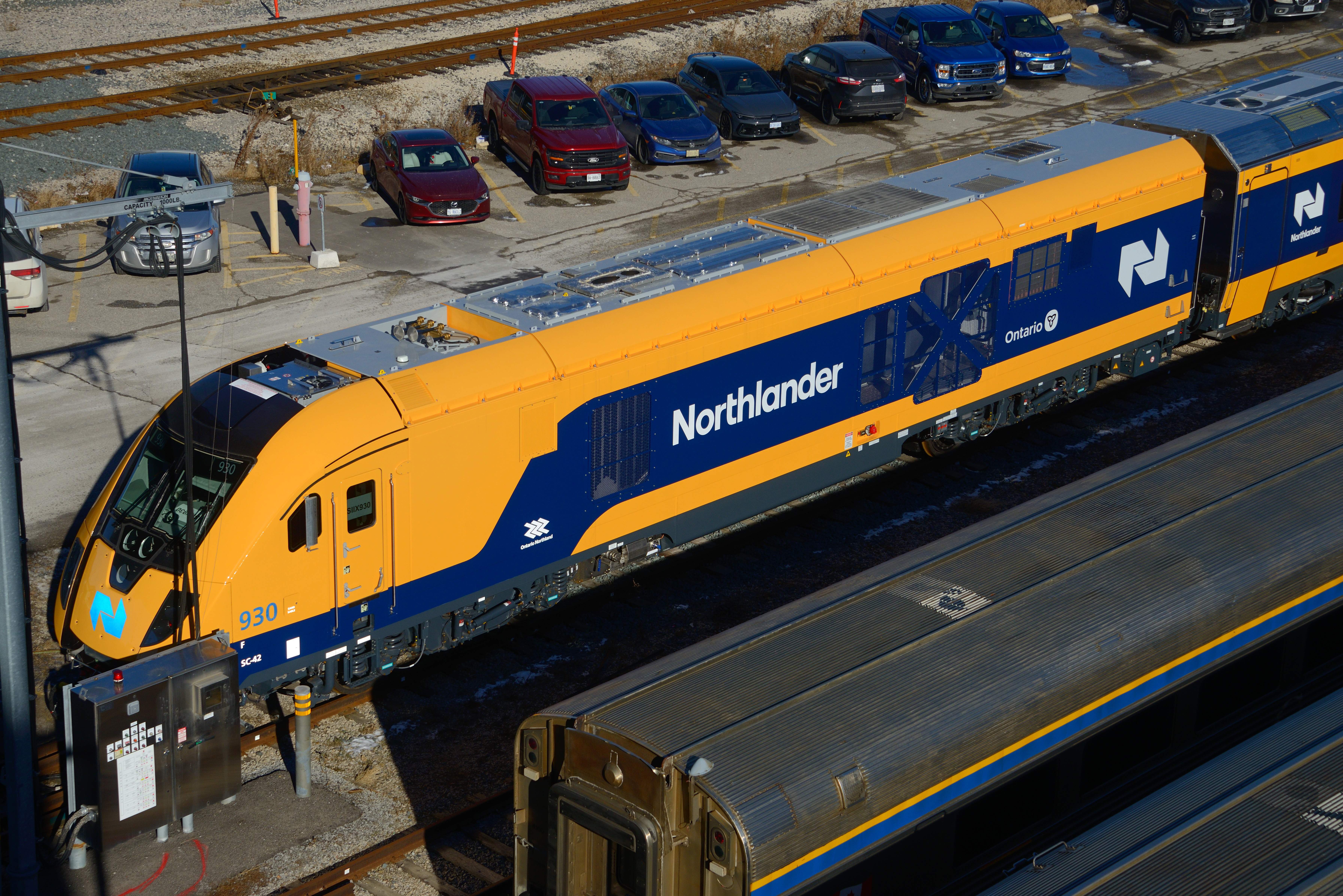
Big transit promises sound great on a campaign trail. Delivering them on schedule is an entirely different story.
Back in July, during a standard testing run, one of the brand-new Siemens Venture train sets meant to revive the iconic Northlander passenger rail service ploughed straight into a tow truck at a rail crossing near Bracebridge, Ontario. Active warning lights were flashing at the High Falls Road crossing, yet the collision still happened. Nobody got hurt, which is a massive relief. But the physical fallout for the train itself has been brutal.
Two and a half months later, that exact same train set is still stuck in repair shops.
If you live in northern Ontario, you know how frustrating this wait has been. The original Northlander service was scrapped back in 2012 by the provincial Liberal government under Kathleen Wynne. Bringing it back was a signature 2018 election promise for Premier Doug Ford[cite: 1]. The goal was simple: reconnect Toronto's Union Station with Timmins and Cochrane[cite: 1], giving northern communities a reliable transit link they lost over a decade ago.
Instead, tests keep stumbling, delays pile up, and locals are left guessing.
The Cost Of A Test Track Collision
Testing new rail infrastructure is supposed to catch problems before paying passengers ever step foot onboard. That is the whole point of commissioning runs. Signals get tested, braking distances get measured, and crews learn the quirks of new equipment.
Colliding with a vehicle on a testing run completely upends that timeline.
The Ministry of Transportation insists that repairs are wrapping up soon and that commissioning activities are moving forward[cite: 1]. But officials have stayed tight-lipped about whether the July crash actually pushed back the launch date. That lack of transparency drives people crazy.
When a multi-million-dollar train set spends months out of commission for body and mechanical work, it creates a bottleneck. You can't run full testing schedules with a damaged fleet.
Northern Communities Are Tired Of Waiting
Local frustration is boiling over, and for good reason. People up north rely on rail transit because winter driving conditions on northern highways can turn deadly in a heartbeat.
Ontario NDP MPP Guy Bourgouin pointed out that residents are getting mixed messages about when the trains will finally roll[cite: 1]. First, rumors pointed to a late August debut. Then, whispers shifted to late September. Meanwhile, the government maintains a broad stance that the service will launch sometime in 2026 without pinning down an exact month[cite: 1].
When you strip away the political spin, the reality on the ground is simple: infrastructure projects of this scale are notoriously difficult to rush. Supply chain issues for specialized train parts mean that fixing structural damage on a modern Siemens railcar takes a long time. You cannot just pick up replacement parts at a local hardware store.
What Needs To Happen Next
If the province wants to restore faith in the Northlander project, communication needs to change immediately.
- Ditch the vague timelines: Give residents a realistic, updated launch window that accounts for the months lost to the Bracebridge crash repairs.
- Prioritize safety education: Incidents at crossings during testing prove that local drivers need extra awareness campaigns about active rail lines returning to service.
- Scale up testing transparency: Share regular updates on testing milestones so communities can see tangible progress instead of staring at empty tracks.
The Northlander is coming back. It just has to survive its own test track first.