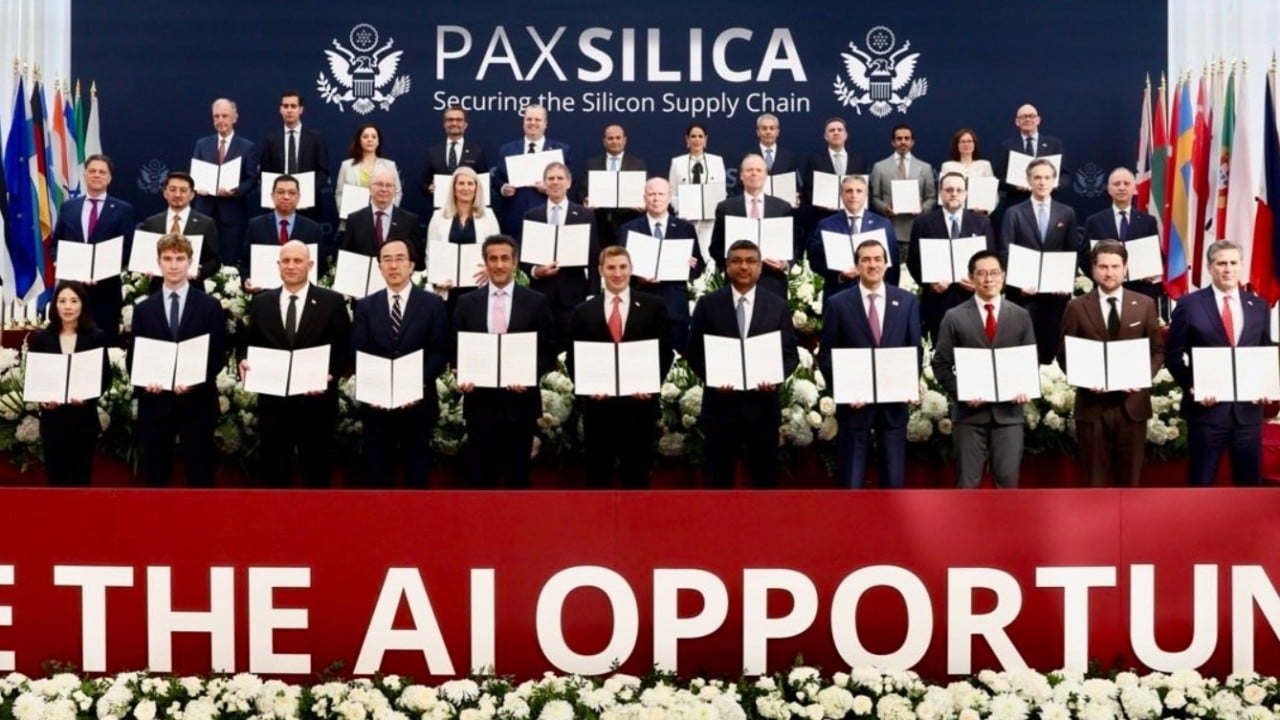
Everybody loves a grand economic headline. Tell politicians that a multi-billion-dollar technology corridor will transform their nation into a high-tech powerhouse, and they will sign the paperwork before the ink dries. Right now, the Philippines is rushing to turn the US-led Pax Silica initiative into reality. But behind the glossy artist renderings of artificial intelligence hubs and advanced manufacturing zones in New Clark City lies a messy scramble against ticking political clocks.
If you look closely at how major infrastructure projects stall or morph when leadership changes in Manila, you realize the panic is justified. Governments change, priorities shift, and grand visions often die in administrative limbo. Yet, the rush to lock in these deals before political shifts derail them brings its own set of high-stakes blind spots.
The High-Speed Gamble in Central Luzon
The core of this strategy revolves around a massive 1,620-hectare economic security zone planned for Tarlac. The goal is straightforward on paper. Officials want to move the country past its decades-long reputation as a pure back-end player in semiconductor assembly, testing, and packaging. They want a piece of the high-end compute, critical mineral processing, and AI infrastructure supply chain.
Trade officials like Department of Trade and Industry Undersecretary Ceferino Rodolfo have pushed hard to frame this as a long-term, multi-administration play. They argue that these investments take time and that predictability is everything. But let us be honest about how politics works in the region. A project announced today can easily become a political football tomorrow if a new administration decides to re-evaluate land use, environmental clearances, or foreign partnerships.
When you tie national industrial planning directly to a foreign strategic framework like Pax Silica, you create immediate friction at home. Local communities, including indigenous groups like the Aeta in Central Luzon, are already pushing back against potential displacement. Massive industrial zones demand staggering amounts of resources. We are talking about projections scaling up to immense water and electricity consumption daily. If local infrastructure cannot handle that weight, the political backlash will arrive long before the first microchip rolls off a production line.
What Planners Get Wrong About Tech Upgrading
There is a common misconception that simply designating a piece of land as an "AI-native economic zone" automatically upgrades your economy. It does not.
For years, the Philippines has excelled in IT-BPM services and basic semiconductor packaging. Moving from packaging chips to designing frontier foundation models or handling deep-tier tech manufacturing requires a massive leap in educational output, engineering talent, and reliable, cheap energy.
- Power Realities: AI infrastructure and advanced manufacturing chew through electricity at a scale the current Philippine grid struggles to support reliably. Power costs in the country remain among the highest in the region.
- The Talent Pipeline: While the nation produces thousands of graduates annually, specialized semiconductor design and advanced metallurgical engineering require targeted institutional programs that take years to scale up.
- Global Competition: South Korea, Taiwan, and Singapore are not standing still. If Manila hopes to rely on investors from these tech powerhouses, the bureaucratic red tape needs to vanish overnight, not after five rounds of bureaucratic committee reviews.
Bases Conversion and Development Authority chief Joshua Bingcang has tried to ease worries by emphasizing that the hub will remain open to investors from multiple nations, rather than locking the country into a single exclusive economic bloc. That diversification is smart. It prevents the country from becoming overly dependent on a single superpower's shifting geopolitical chessboard.
The Real Danger of Rushing the Process
When you rush a multi-decade industrial transition out of fear that a future administration might cancel it, you miss critical details. You cut corners on environmental impact studies. You bypass deep consultations with local stakeholders. You sign agreements before hammering out anchor tenants or concrete financing timelines, leaving the domestic economy exposed to empty promises.
Real economic transformation does not happen because a press release says it will. It happens when policy consistency outlives the politicians who initiated it.
If Manila wants Pax Silica to survive the next electoral cycle, officials need to stop treating it like a frantic race against the clock. They need to build domestic consensus, lock in bipartisan legislative backing, and ensure that ordinary citizens see tangible benefits rather than just resource strain and land disputes.
Stop pretending that speed equals security. True industrial resilience takes patience, transparent execution, and a clear-eyed look at what the country is actually gaining versus what it is risking.