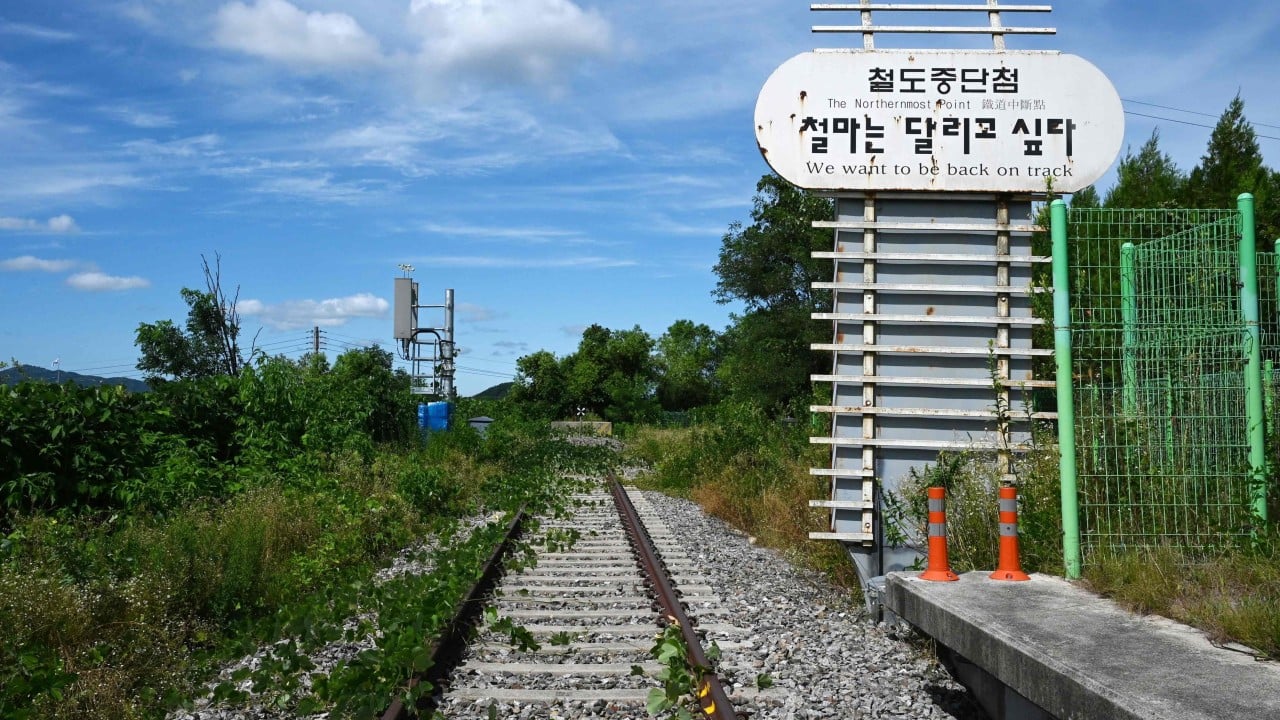
You can stand at the edge of the demilitarized zone in Cheorwon, look out at rusted tracks swallowed by weeds, and read a desperate sign in English: We want to be back on track. It is a poignant snapshot of a country talking to itself.
Seoul wants to rebuild a cross-border railway even though Pyongyang refuses to pick up the phone. Under President Lee Jae Myung, South Korea's Unification Ministry announced plans to restart construction on the Gyeongwon railway line, targeting a 2029 completion date. This project aims to link Seoul to the eastern North Korean port city of Wonsan. Read more on a related issue: this related article.
The timing is bizarre. North Korea recently blew up symbolic road and rail links, codified the South as its principal enemy, and routinely fires ballistic missiles over regional waters. Kim Jong Un is not interested in holding hands or sharing locomotive schedules. Yet Seoul is moving forward anyway. Why?
The Politics of Hope Versus Cold Reality
To understand this lonely diplomatic push, you have to look past the immediate hostility and examine domestic South Korean politics. Administrations in Seoul swing back and forth like a metronome. When progressive leaders take office, they lean heavily into engagement, economic integration, and peace symbolism. Further journalism by Reuters highlights similar perspectives on this issue.
The Gyeongwon line project is not entirely new. Work originally began back in 2015, only to grind to a sudden halt a year later following North Korea's fourth nuclear test. Since then, the tracks have sat dead, serving mostly as a eerie tourist attraction at Woljeong-ri station.
Locals living near the border harbor deep skepticism. Farmers and small-business owners in Cheorwon have heard these grand speeches about reconciliation for decades. To them, pouring millions of won into steel ties that lead straight into a hostile void feels less like strategy and more like wishful thinking.
What Seoul Expects to Gain
The Ministry of Unification argues that laying down physical infrastructure is about long-term preparation, not immediate gratification. Seoul is packaging this railway push alongside broader regional ideas, including health cooperation, the Wonsan-Kalma tourism zone, and a revival of the Greater Tumen Initiative with China, Mongolia, and Russia.
By keeping these projects alive on paper and in early-stage engineering, South Korea tries to preserve a framework for future dialogue. If geopolitical winds shift unexpectedly, Seoul wants the blueprint ready. Officials know that waiting for Pyongyang to ask for a train station before starting plans means losing years of precious time if a breakthrough ever occurs.
There is also the diplomatic signaling aspect. South Korea wants to project a consistent image of a responsible, peace-seeking middle power. Stopping all outreach completely would mean handing absolute control of the inter-Korean narrative over to hardliners in Pyongyang.
The North Korean Dead End
North Korea sees things through a completely different lens. Pyongyang has shifted its strategic focus away from eventual reunification, choosing instead to enshrine a two-state hostile system in its constitution. Kim Jong Un's regime views South Korea not as a brotherly nation waiting to be reconnected, but as a primary target and a subordinate puppet of Washington.
When Kim's powerful sister mocks Seoul's diplomatic overtures, she reflects a regime that values nuclear deterrence far above commercial rail links. North Korea prefers to deal directly with the United States or lock in tight security partnerships with Moscow and Beijing. Seoul's unilateral infrastructure projects do little to shift that calculus.
Where the Project Goes From Here
If you are tracking how this plays out, watch the funding allocations and preliminary ground-clearing scheduled for next year. The government plans to loosen regulations on the Inter-Korean Cooperation Fund to finance these economic zone preparations.
The iron horse may want to run, but until Pyongyang changes its mind, those tracks will stop abruptly at the fence. Seoul is building a bridge to nowhere, hoping against all evidence that someone on the other side will eventually decide to cross it.