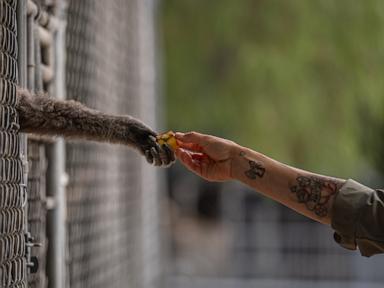
You won't hear them before you smell them, and then you'll hear them. Gibbons don't chatter like ordinary monkeys. They sing. Loud, echoing duets that carry for miles across the rugged landscape just outside Los Angeles. For half a century, the Gibbon Conservation Center in Santa Clarita has quietly operated as a lifeline for some of the rarest apes on the planet. Most people drive past the sprawling canyon properties of Southern California without realizing that an endangered primate sanctuary sits right in their backyard.
Primate conservation is messy, expensive, and heartbreakingly slow. You can't just throw animals into a cage and hope for the best. You need specialized knowledge, massive enclosures, and a deep understanding of arboreal psychology. That is why this half-century milestone matters. It proves that small, focused sanctuaries can outlast the noise and actually save species from slipping into extinction.
The Sound of Survival in Santa Clarita
Founded back in 1976 by Alan Mootnick, this sanctuary wasn't built as a tourist trap. Mootnick wanted a dedicated breeding and research facility for gibbons because nobody else was paying attention to them. While chimpanzees and gorillas grabbed the headlines, small apes fell through the cracks.
Gibbons are built differently. They don't walk on all fours. They brachiate, launching themselves through the air at terrifying speeds using only their impossibly long arms. Replicating that kind of freedom in captivity requires vertical space and complex rope systems. The center built massive outdoor enclosures that mimic a natural forest canopy.
Understanding the Real Threat to Small Apes
People assume zoos solve everything. They don't. Captive breeding programs require intense genetic management, especially for endangered gibbon species like the agile gibbon, the pileated gibbon, and the silvery gibbon. If you mix the wrong lineages, you ruin the genetic viability of the population.
Habitat destruction in Southeast Asia is ripping through the rainforests faster than anyone can track. Palm oil plantations and illegal pet trade networks devastate wild populations daily. When poachers kill a mother gibbon, the baby is often ripped from her arms and sold into the illegal exotic pet market. Facilities in Southern California take in these traumatized, confiscated animals and give them a permanent home where they can finally socialize with their own kind.
Rehabilitation isn't a quick fix. It takes years for a rescued gibbon to unlearn human dependency. You have to watch them closely, manage their diet carefully, and understand that their social hierarchies are notoriously delicate. One wrong pairing in an enclosure can lead to serious aggression.
What Visitors Get Wrong About Primate Sanctuaries
If you visit, don't expect a traditional zoo experience. You won't find glass viewing tunnels or gift shops packed with plastic trinkets. It's quiet, respectful, and educational. The focus is entirely on the animals' well-being, not human entertainment.
Many well-meaning animal lovers think every captive primate can eventually be released back into the wild. That is a dangerous myth. Gibbons raised by humans or stolen from the wild as infants lack the survival skills needed to evade predators or find native food sources. Worse, releasing them into unfamiliar forests can introduce captive pathogens into wild populations. Sanctuaries provide the next best thing: a sprawling, safe retirement where they can live out their natural lives with dignity.
How to Support Real Conservation Efforts
You don't need to live in California to make an impact. Supporting specialized sanctuaries requires cold hard cash, and most of these non-profits operate on razor-thin budgets.
- Donate directly to accredited primate facilities rather than buying tickets to roadside operations that exploit animals for selfies.
- Check the labels on your grocery items to avoid unsustainable palm oil, which directly destroys wild gibbon habitats in Indonesia and Malaysia.
- Spread awareness about the illegal wildlife trade. Small apes are not pets.
Fifty years is a long time to keep doors open in the brutal non-profit landscape. The Gibbon Conservation Center survived wildfires, economic downturns, and leadership changes because the mission is bigger than any single person. These endangered apes deserve a voice, and for half a century, that voice has echoed loudly through the California hills. Protect their habitat, fund the people doing the hard work on the ground, and stop treating exotic wildlife like fashion accessories.