European unity is cracking right at the passport control desk. Madrid and Rome are locked in an escalating diplomatic war over border checks, leaving millions of travelers caught in the crossfire. It started with a sudden migration surge in North Africa, but it has quickly morphed into a bitter test of wills between two major Mediterranean governments.
If you think the Schengen Area guarantees friction-free travel across Europe, think again. The fallout from the recent Ceuta crisis has exposed how quickly open borders can vanish when political tensions boil over.
How a Crisis in Ceuta Sparked a European Border War
Late last month, roughly 72,000 people rushed across the border into Ceuta, a Spanish enclave nestled on the coast of North Africa. The chaotic rush overwhelmed local authorities and tragic fatalities mounted as people tried to navigate treacherous breakwaters. While the border was secured quickly and the vast majority of arrivals were returned to Morocco, the shockwaves hit European capitals instantly.
Rome panicked. Italian Prime Minister Giorgia Meloni's government wasted no time pointing fingers at Madrid. Italian authorities argued that Spain's domestic migration policies—specifically a recent regularisation program meant to document working migrants—invited disaster.
On August 1, Italy unilaterally launched internal border controls on travelers arriving from Spain, partially suspending Schengen agreements. Italian Foreign Minister Antonio Tajani defended the choice bluntly, claiming Rome had to protect itself because Italy is often the final destination for migrants moving through Europe.
Spain Hits Back With Retaliatory Checks
Madrid didn't take the snub lying down. Calling Italy's restrictions discriminatory and unjustified, Spanish officials issued an ultimatum. When Rome refused to back down by the August 9 deadline, Spain retaliated.
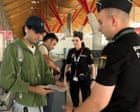
At midnight on Saturday, Spanish authorities began executing random spot checks on visitors arriving from Italy at major airports like Madrid-Barajas and Barcelona. Suddenly, tourists, business flyers, and dual citizens found themselves trapped in long queues and chaotic checkpoint scenes.
Spanish Foreign Minister José Manuel Albares didn't mince words, calling the initial Italian restrictions a torpedo fired straight into the hull of European unity. Yet, by launching their own checks, Spanish leaders created the exact administrative headache they were protesting.
The Hypocrisy Fueling the Feud
Beneath the diplomatic outrage lies a thick layer of political posturing. Rome has loudly criticized Spain for offering pathways to legal residency for undocumented workers, labeling it an open invitation to unauthorized border crossings.
The irony is hard to miss. Independent researchers and financial analysts note that Italy's own administration is quietly pursuing similar pathways to grant work permits to over one million foreign workers over the next few years. Both countries desperately need foreign labor to sustain their aging workforces and economies, yet politicians on both sides find it electorally profitable to posture as border hawks.
With key political matchups looming across Europe, conservative and far-right leaders are using migration flashpoints to signal strength to their domestic bases. Ordinary citizens pay the price. More than 8 million people traveled between Italy and Spain last year, and right now, many of them are dealing with absurd bureaucratic delays on routes that used to require nothing more than a boarding pass.
What Happens Next for European Travel
EU migration commissioner Magnus Brunner has stepped in, holding emergency talks with officials from both nations. Both Madrid and Rome have publicly insisted that these border controls are strictly temporary.
Signals from Brussels suggest that checks could wind down soon as fears of subsequent crossing attempts on August 15 subside. Even so, the damage to regional trust is done.
If you are flying between Italy and Spain this month, check your airline requirements, keep your identification ready at all times, and expect random security delays that have no business happening inside the Schengen zone.