When people decide to commit a crime on camera and broadcast it live, they usually expect a different ending. They think the attention will shield them. They believe their personal crusade will rewrite the rules of public property and federal law.
Reality usually hits much faster than expected. You might also find this related article insightful: Why Trump Banning Major News Outlets From The White House Breaks Longstanding Legal Norms.
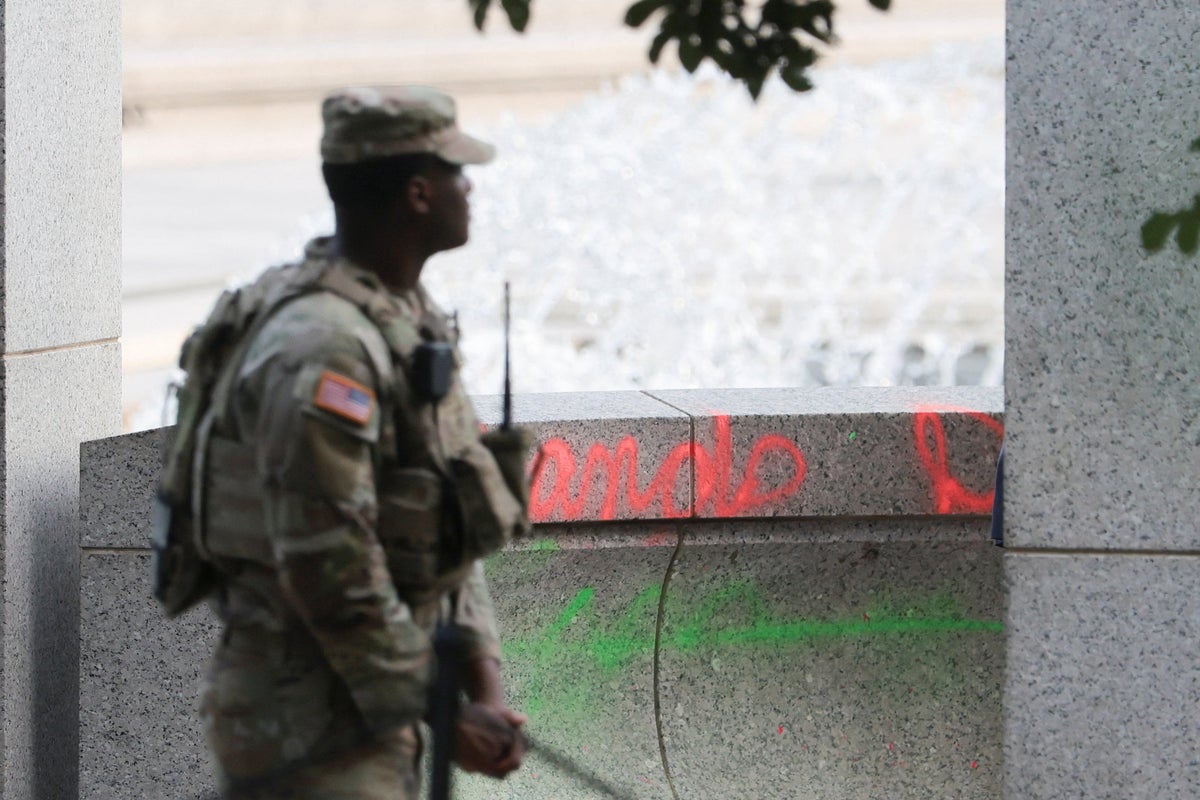
Melissa Farris found that out the hard way. The Department of Justice formally indicted the Kentucky resident on two federal felony counts after she allegedly defaced the historic World War II Memorial in Washington, D.C. Prosecutors say she spray-painted the phrase "Clean hands dirty $" directly onto the stonework and dumped foaming soap into the memorial's iconic fountain.
If you think defacing a public landmark is a strange way to fight a grievance, you are right. But what makes this case stand out isn't just the sheer brazenness of the act. It's the digital trail left behind, the modern obsession with public streaming, and the stark reality of federal property laws. As highlighted in detailed coverage by BBC News, the effects are worth noting.
The Anatomy of a Public Stunt
On an ordinary August afternoon, tourists visiting the National Mall encountered something entirely out of the ordinary. A woman wasn't just taking photos or enjoying the architecture. She was actively vandalizing it while recording herself on a livestream.
According to court documents released by the DOJ, Farris didn't try to hide her actions. In fact, she leaned directly into them. She broadcasted her actions, speaking directly to her audience while committing the vandalism.
"I am cognitively aware and executively of the choices I am making," she reportedly stated during her stream. Her stated goal? She wanted to force her personal whistleblower case into a courtroom. She believed that by destroying federal property, she could compel the legal system to address her grievances.
It is a bizarre legal strategy. Vandalizing a veterans' memorial rarely opens the door to a sympathetic hearing. Instead, it opens the door to a federal indictment.
Witnesses on the scene reacted quickly. Someone snapped a photograph of the incident, which proved crucial for law enforcement. A park ranger arrived shortly after, but the suspect had already fled the immediate area. Police officers quickly connected the dots. Just days prior, authorities had arrested Farris for unlawfully camping on federal property just a few blocks away.
Recognition came easy. The trail of evidence was practically gift-wrapped for investigators.
The Heavy Price of Federal Charges
When federal prosecutors stepped in, the charges weren't minor. Farris faces two distinct federal counts: destroying a veterans' memorial and destroying government property.
These aren't local municipal code violations or minor property damage charges you can talk your way out of with community service. Federal property crimes carry severe legal weight. When you target a national monument honoring military veterans who fought in global conflicts, the political and judicial optics become exceptionally harsh.
Public figures immediately seized on the incident. Former President Donald Trump took to social media to blast the vandalism, calling it a direct insult to the American heroes who died in World War II. Advocacy groups like the Friends of the National World War II Memorial issued strong condemnations, pointing out that whatever personal grievances an individual holds, desecrating a sacred national space crosses an unforgivable line.
The backlash highlights a broader sensitivity surrounding monuments in the capital. Tensions remain high regarding the security and preservation of public spaces on the National Mall. Incidents involving damage to public water features and historical structures have put law enforcement and park rangers on high alert.
The Illusion of Social Media Justice
We live in an era where people treat social media platforms as their personal courts of appeal. If you shout loud enough online, the logic goes, someone will validate your cause.
Except the internet doesn't override federal statutes.
Livestreaming a crime does not offer legal immunity. It simply provides prosecutors with a clean, unedited confession video that plays exceptionally well for a jury. Law enforcement agencies don't need to piece together circumstantial evidence when a suspect happily records every single second of the offense, names themselves, and explains their premeditated intent to the camera.
When people attempt to weaponize vandalism for attention, they underestimate how rigidly institutions protect physical infrastructure. Monuments like the World War II Memorial aren't just blocks of stone. They are heavily protected federal assets. Damaging them triggers automatic, aggressive prosecution designed to deter copycats.
Farris wanted a courtroom appearance. She wanted a stage to air her grievances. Now, she is getting her day in federal court, facing serious felony charges that could result in significant prison time.
Think twice before treating a national landmark as a billboard for your personal crusade. The legal system is listening, and it doesn't accept digital streaming as a defense.