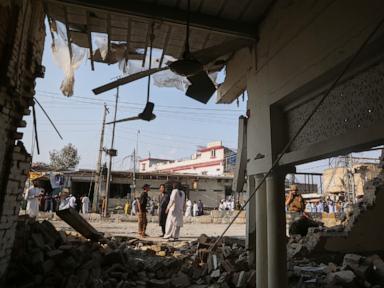
When a suicide bomber rammed an explosives-laden vehicle into a mosque inside a secure police compound in Kohat, it wasn't just another isolated incident of regional violence. It marked the grim opening salvo of a brutal 20-hour siege that left 21 people dead, wounded over a hundred others, and exposed the fragile security posture plaguing Pakistan's northwestern Khyber Pakhtunkhwa province.
If you've been following South Asian security dynamics, you know that attacks targeting law enforcement infrastructure are becoming terrifyingly calculated. This wasn't a random hit-and-run. The target was the Special Branch intelligence agency headquarters and Counter Terrorism Department offices in Kohat—the very nerve center responsible for tracking and neutralizing militant networks across the region. Expanding on this theme, you can find more in: Why Cuba Keeps Going Dark And What The Headlines Miss.
Inside the 20-Hour Siege
The operation began on a Friday afternoon when the initial blast tore through the outer wall and wrecked the compound's mosque while worshippers gathered for prayers. Gunmen immediately flooded the facility, turning official offices into a fortified battleground.
For the next twenty hours, residents in Kohat listened to continuous bursts of automatic gunfire echoing through the streets as reinforcements converged on the area. Local police officials confirmed that the standoff finally concluded after security teams cleared the complex, recovering the bodies of eight attackers, including suicide bombers who detonated explosives inside the building on Saturday morning. Analysts at Wikipedia have shared their thoughts on this situation.
The human toll was immediate and devastating. Funerals for fallen police officers were held late Friday at local police lines before their remains were handed over to grieving families. Hospitals struggled to cope with the influx of 103 wounded individuals, many of whom were police personnel and local civilians caught in the blast radius.
The Broader Threat Landscape
While no group immediately claimed responsibility for the assault, suspicion points squarely at the Tehrik-e-Taliban Pakistan, commonly known as the TTP. The militant group has steadily escalated its campaign against police officers and security installations, capitalizing on a volatile geopolitical climate.
The TTP operates independently of, but maintains ideological ties to, Afghanistan's ruling Taliban. Islamabad has repeatedly accused Kabul of harboring TTP leadership and turning a blind eye to cross-border incursions—charges that Afghan authorities continue to deny.
This incident carries painful echoes of past tragedies, such as the devastating 2003 bombing at a fortified police compound mosque in Peshawar that killed 101 people, mostly police officers. It's clear that intelligence facilities and police lines are no longer immune to coordinated, high-casualty assaults.
The Political and Operational Fallout
Top government figures, including President Asif Ali Zardari and Prime Minister Shehbaz Sharif, issued strong condemnations, with Zardari emphasizing that eradicating militant factions remains an absolute prerequisite for national survival.
Yet, statements and condemnations do little to solve the underlying strategic vulnerabilities. Security forces are stretched thin, facing an emboldened insurgency that knows how to exploit porous borders and local intelligence gaps. The fact that attackers could breach a high-security counter-terrorism compound and hold it for nearly a day proves that defensive measures need a complete overhaul.
Protecting frontline personnel requires more than just reactive crackdowns; it demands dismantling the logistical networks and safe havens that allow these groups to plan such sophisticated operations in the first place. Until state strategies adapt to this evolving threat, communities in the northwest will continue paying the heaviest price.
For more details on regional security updates, watch this news report on militant attacks in Pakistan. This video provides helpful context on the broader security challenges facing Pakistan's border regions.