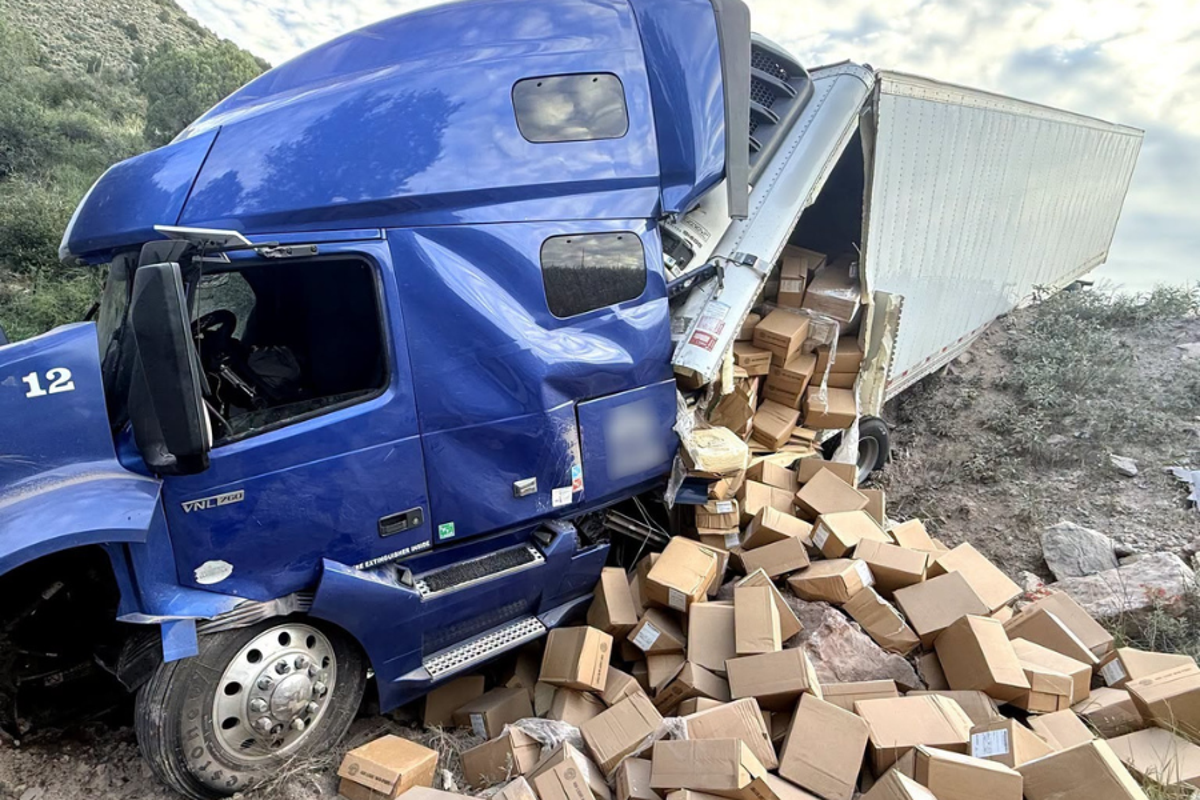
Forty thousand pounds of cheese tumbling down a steep mountain ravine sounds like a strange cartoon sequence. Yet that is precisely what happened on US-60 outside Whiteriver, Arizona, when a semi-truck clipped a guardrail and took a violent plunge off the highway.
An Arizona highway cheese spill might sound funny on social media, but the reality behind these massive freight accidents reveals a grueling mix of driver exhaustion, dangerous mountain infrastructure, and cargo logistics gone wrong. When state troopers arrived at the crash site on August 16, they did not find a standard fender-bender. They found a commercial vehicle resting face-down in a deep ditch after tearing through a right-of-way fence and smashing over massive boulders.
You might wonder how a vehicle carrying twenty tons of dairy products manages to miss a curve entirely. The details from the Arizona Department of Public Safety shed light on a terrifying reality faced by long-haul truckers every single day.
What Really Caused the Arizona Cheese Truck Crash
The driver told investigators he swerved to avoid an animal darting across the dark, winding stretch of US-60. It is a classic response that anyone behind the wheel late at night understands completely. Animals run into traffic without warning. Swerving is an instinctual survival reaction.
Troopers on the scene looked deeper. They pointed out another culprit that rarely gets enough airtime in news reports: extreme driver fatigue.
The Arizona Department of Public Safety put out a blunt public statement following the accident, reminding everyone that drowsy driving functions just like driving under the influence. Mountain roads require absolute precision. If your reaction time drops by even a fraction of a second on a sharp curve, you are off the road before you can correct your steering.
Commercial trucking schedules remain brutal. Long hours behind the wheel across monotonous stretches of desert highways take a heavy toll on cognitive focus. When exhaustion meets a treacherous mountain grade, disaster follows quickly.
The Cleanup Logistics of Forty Thousand Pounds of Dairy
Clearing a highway after a commercial truck wreck is difficult enough when the trailer carries dry goods or industrial supplies. Clearing forty thousand pounds of perishable food items introduces a totally different kind of headache.
Dairy products spoil rapidly under desert sun. When a massive payload of cheese breaks open across rocks and dirt, you cannot simply push it aside with a bulldozer and open the lanes back up. Heat alters everything. The environmental and logistical nightmare of recovering a cargo hold of spoiled dairy requires heavy equipment, specialized towing crews, and hours of hazardous material management.
Local commuters faced significant delays while emergency crews worked to hoist the wrecked semi out of the ravine. Traffic management on rural highways like US-60 often turns into a bottleneck because alternative routes simply do not exist out in the desert terrain.
Why Mountain Highways Are Freight Traps
Driving a semi-truck through Arizona mountain passes is vastly different from cruising down an interstate. Drivers deal with sudden elevation changes, sharp switchbacks, and wildlife crossings that appear out of nowhere.
If you drive commercial routes or regularly travel through the Southwest, you know how quickly conditions change. Here are a few practical safety rules to keep in mind when sharing the road with heavy freight on dangerous grades:
- Give semi-trucks massive amounts of breathing room on curves. They need extra space to swing wide.
- Never hang out in a truck's blind spots, especially when approaching mountain grades where braking distances increase dramatically.
- Respect your own fatigue limits. If a commercial driver can drift off course due to exhaustion, standard drivers are just as vulnerable on long desert stretches.
The internet had its fun with the incident, filling comment sections with endless dairy puns about cheddar, gouda, and municipal dairy disasters. Behind the jokes lies a stark reminder of how fragile highway infrastructure can be when a twenty-ton vehicle loses its footing on a mountain curve.
Pay attention to your limits, slow down on winding roads, and remember that safety matters far more than keeping an impossible delivery schedule.