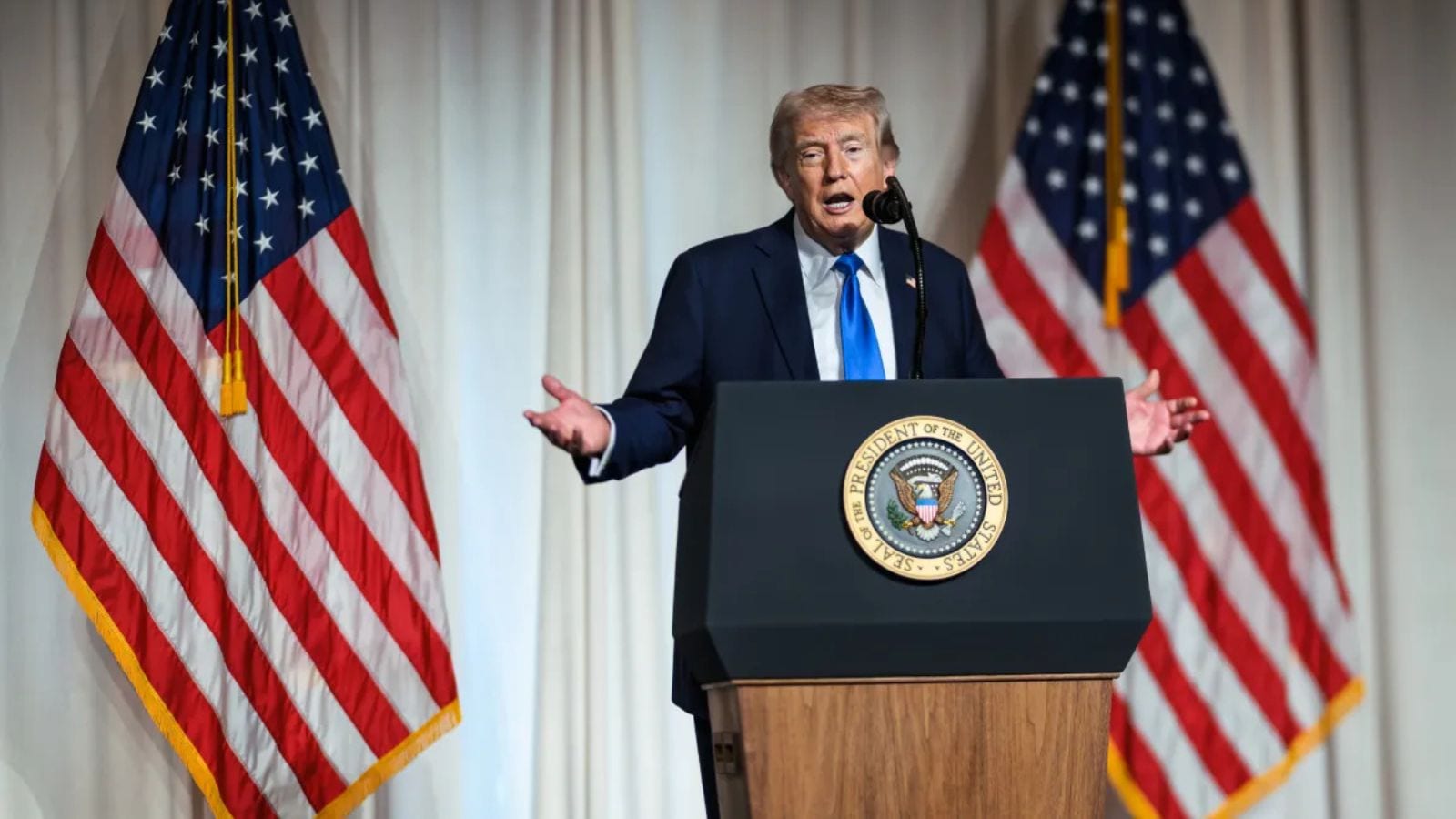
American foreign aid is undergoing a massive ideological rewrite. For decades, the money flowing out of Washington into global democracy programs followed a predictable script. It funded human rights monitoring, backed traditional civil society, and supported legal systems in developing nations. That era is over. The Trump administration is aggressively shifting gears to pump millions of dollars into right-wing, anti-woke, and national sovereignty movements across Europe.
If you think foreign aid is just about development loans or disaster relief, you are missing the real story. Congressional notifications and leaked State Department documents reveal a deliberate effort to use public money to back political allies abroad. This is not a subtle policy tweak. It is a fundamental reordering of American geopolitical influence designed to build a global alliance of conservative movements. Expanding on this theme, you can also read: Why Bangladesh Is Reexamining Its 101 Pacts With India Right Now.
The targets of this new funding strategy tell you everything you need to know about where Washington stands. Millions are being directed toward groups fighting European Union regulations, British conservative organizations, and causes tied directly to the cultural battles of the American right. It represents a dramatic break from decades of bipartisan consensus on foreign assistance.
The New Agenda for American Foreign Aid
The Bureau of Democracy, Human Rights, and Labor has historically been the arm of the State Department focused on exposing authoritarian abuses. It tracks political prisoners, supports independent journalists in dictatorships, and documents wartime atrocities. Now, Trump administration appointees have turned their attention toward wealthy Western democracies. They are targeting what they view as a different kind of oppression: progressivism and supranational governance. Experts at NPR have shared their thoughts on this matter.
Career diplomats and lawmakers have expressed deep shock at the sudden shift. Reports indicate that political appointees bypassed normal open bidding processes for at least a dozen grants. Instead of letting independent panels evaluate who gets the cash, officials brought their own pre-selected list of organizations to the table.
This top-down approach has triggered intense pushback inside the State Department. Former officials argue that using public funds this way looks less like diplomacy and more like partisan meddling in the domestic politics of close allies. The administration sees it differently. To them, Western civilization itself faces an existential threat from open borders, digital censorship, and the erosion of national sovereignty. They want to use American financial might to fight back.
One of the centerpieces of this new strategy is a $4.9 million program dedicated to building civilizational self-confidence in Europe. The funding is earmarked for research, conferences, and cultural engagements designed to revive traditional values. It explicitly focuses on wealthy European democracies rather than the traditional recipients of human rights aid. The message is clear. Washington believes Western Europe needs saving just as much as any developing nation.
Targeting the European Union Regulatory Machine
Tech regulation has become the primary battleground for free speech advocates, and the Trump administration is putting serious money behind the fight. The State Department is preparing a $2 million grant specifically designed to counter censorship stemming from European Union regulations.
The main targets here are the Digital Services Act and the Digital Markets Act. These sweeping EU laws force major tech platforms to police hate speech, disinformation, and illegal content more aggressively. While Brussels views these rules as essential protections for democratic discourse, the American right views them as a blueprint for institutionalized censorship.
By funding groups that actively oppose these laws, the US government is setting itself on a direct collision course with the European Commission. It is an extraordinary move. A US administration is using taxpayer dollars to undermine the domestic regulatory framework of its largest trading partner.
This funding will likely support legal challenges, public advocacy campaigns, and academic research aimed at dismantling European digital rules. The goal is to protect alternative platforms and conservative figures who argue they are being unfairly targeted by tech giants trying to comply with European law. It signals that Washington will no longer treat the regulatory decisions of allied nations as purely domestic matters.
Cash for the Anti Woke Crusade in the United Kingdom
The British political scene is feeling the immediate effects of this funding pivot. A $5 million grant is slated for Free Speech Union International, an umbrella organization linked directly to the British group founded by conservative peer Toby Young.
The Free Speech Union has built its reputation by defending individuals who lose their jobs or face public backlash over controversial statements. They frequently intervene in fights over gender identity, academic freedom, and cancel culture. Critics argue the group leans heavily toward conservative and anti-woke causes. The organization maintains it is strictly non-partisan.
The State Department justified the massive grant by pointing to the group's work against digital overregulation and restrictive online safety laws. For a group that operates primarily in wealthy nations like the UK and Australia, a $5 million influx of cash is a massive upgrade. It gives them the resources to scale up their operations dramatically and export their model to other parts of Europe.
Then there is the case of 878, a fledgling British-American think tank co-founded by former Conservative cabinet minister Jacob Rees-Mogg. Initial government documents showed plans to award the group $7 million to strengthen the civilizational partnership between the US and the UK. The group's stated focus includes pushing back against mass migration, reviving Judeo-Christian culture, and promoting rapid re-industrialization through energy abundance.
The proposed grant to 878 caused an immediate uproar. Some officials claimed the document was drafted by a junior staffer and did not represent finalized policy. The State Department later backed away from funding the think tank after fierce resistance from members of Congress. Even so, the fact that such a proposal made it onto official planning documents shows exactly how far some administration officials are willing to go to fund ideological allies.
Redefining Human Rights from South Africa to Washington
The reordering of foreign aid priorities is not limited to Europe. The administration is also rewriting the definitions of human rights abuses in the Global South. A $1 million grant has been proposed to document human rights violations against ethnic minorities in South Africa.
The official language of the proposal avoids naming specific groups. However, the political context makes the intent obvious. The Trump movement has long highlighted the plight of white South African farmers, arguing they face systemic violence and government-backed discrimination. Traditional human rights organizations argue that while rural crime is a serious issue, portraying it as a targeted campaign against white citizens misrepresents the broader reality of crime in South Africa.
By allocating federal funds to this specific cause, the administration is aligning US foreign policy with a narrative popular among American conservatives. It shifts resources away from documenting widespread political violence or institutional corruption, focusing instead on a highly specific cultural flashpoint.
Simultaneously, the administration is planning a massive $40 million grant for the Victims of Communism Memorial Foundation. This Washington-based non-profit focuses on educating the public about the history and atrocities of communist regimes. While the group has received federal funds under previous administrations, this new sum represents an enormous expansion.
To put it in perspective, the foundation's total assets hovered around $12 million recently. A $40 million injection completely transforms their financial baseline. This move happens as domestic political rhetoric intensifies, with the administration frequently accusing political opponents at home of pushing communist agendas. The funding serves a dual purpose: reinforcing an anti-leftist narrative globally while scoring ideological points domestically.
What This Shift Means for Transatlantic Alliances
European leaders are not taking this quiet intervention well. The prospect of Washington funding groups dedicated to undermining local laws has sparked immediate anger across European capitals.
In Germany, center-right political figures like Friedrich Merz have spoken out bluntly. Merz stated clearly that he does not want the American government or close institutions interfering in European elections or political systems. The tension is equally palpable in London. The newly established government faces an early, awkward diplomatic hurdle. Dealing with a US administration that actively bankrolls domestic political opponents will make routine diplomatic cooperation highly stressful.
This approach completely flips the traditional logic of soft power. Historically, the US used aid to promote democratic stability and alignment with Western institutions. Now, it is using aid to challenge the very institutions that govern Western Europe. It treats the political establishment in cities like Brussels, Berlin, and London not as allies to cooperate with, but as ideological rivals to challenge.
The long-term consequences of this shift could be profound. If foreign aid becomes a tool for exporting domestic culture wars, the credibility of American democracy assistance will suffer globally. Future administrations will likely spend years trying to reverse these programs, leading to a highly erratic foreign policy that changes completely every four years.
Next Steps for Policy Watchers and Organizations
This policy shift demands immediate attention from anyone involved in international relations, civil society, or corporate government affairs. You cannot rely on old assumptions about how Washington spends its money.
- Track the Federal Register and Congressional Notifications: Watch for the formal implementation of these grants. Bypassing traditional bidding processes means these allocations will move through non-traditional channels.
- Assess Regulatory Risk in Europe: Companies operating in the European tech space must brace for heightened political conflict. US-backed groups will likely escalate campaigns against the Digital Services Act, increasing legal volatility.
- Prepare for Diplomatic Friction: Organizations working on transatlantic cooperation should anticipate rocky relations between US embassies and European host governments. Traditional diplomatic channels will be strained by these funding choices.
The reordering of American aid is an active strategy to build a parallel network of conservative institutions worldwide. The money is moving, the priorities have changed, and the global political landscape will feel the impact for years.