You can sign an executive order with a flourish. You can demand federal agencies update every map within thirty days. But you cannot force fifty million Americans to stop typing a four-hundred-year-old name into a search box.
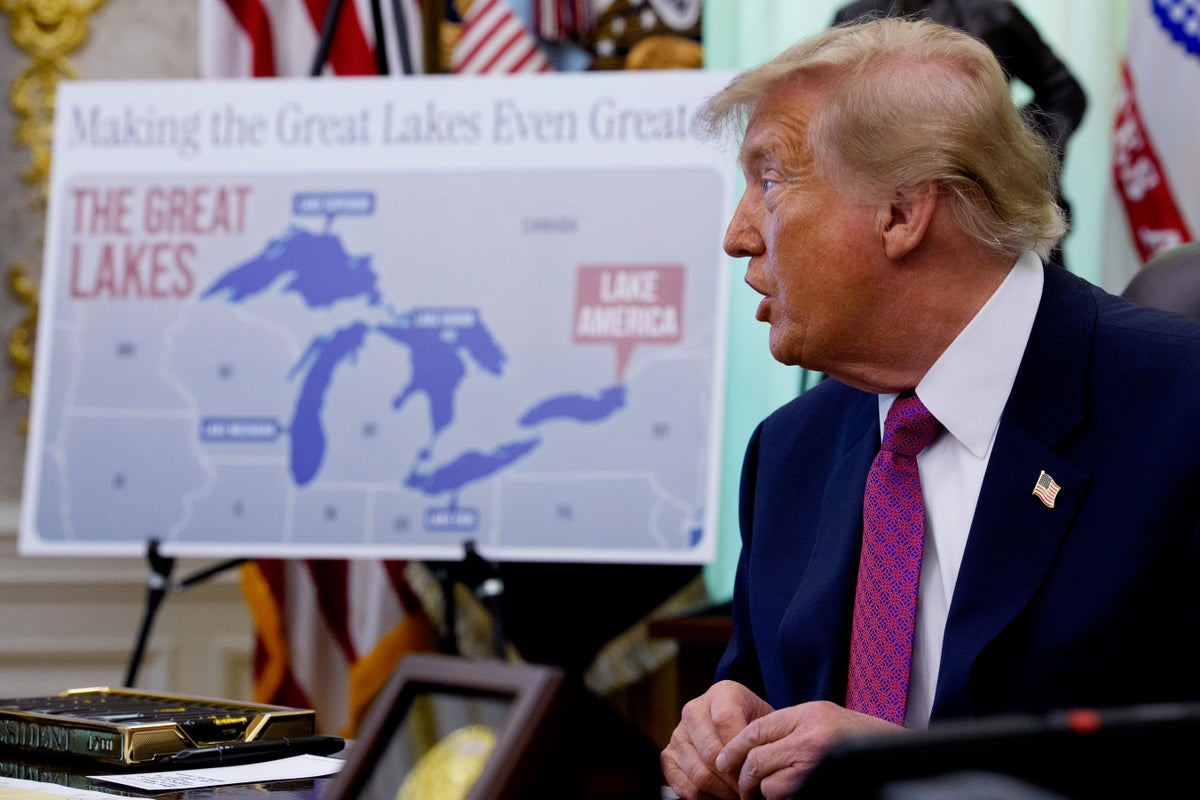
That is the awkward reality facing Washington right now. Following a sudden breakdown in trade talks between the White House and Ottawa—which quickly escalated into steep fifty percent tariffs on billions in Canadian goods—President Donald Trump took a familiar swipe at America's northern neighbor. He issued a directive ordering the Department of the Interior to scrub the historic identifier off official federal databases and replace it with a new moniker: Lake America.
It was classic political theater. It also completely failed on Google.
Data from search analysts shows that citizens across all fifty states are openly ignoring the new federal label. When people look up the shared waterway, they keep typing its original name. Every single state is uniform on this. Not a single state flipped to the president's preferred phrasing.
This whole stunt mirrors what happened earlier when the administration tried renaming the Gulf of Mexico to the Gulf of America. Months down the road, search trends for that body of water showed the exact same stubborn refusal to adopt the white-house branding. Maps on government websites might change instantly. Human habits take a lot longer to break.
The Real Cost of Geopolitical Naming Grudges
Let us look at why this matters beyond a funny trivia point about search trends. Executive renamings during trade disputes aren't just quirky news items. They signal deep economic friction. When trade negotiations collapse and leaders start slapping heavy tariffs on cross-border goods like lumber, energy, and manufactured items, ordinary businesses feel the pinch immediately.
Supply chains running between US states and Canadian provinces operate on tight margins. Companies don't care what a lake is called on a newly printed federal document. They care about shipping costs, customs delays, and inflation hitting their warehouses.
Canadian Prime Minister Mark Carney pushed back hard against the renaming stunt. He pointed out that the original word comes from the Wendat language, meaning a big, beautiful body of water, with roots stretching back centuries before the United States even existed. Ottawa made it clear they are sticking with the historic hydronym, and they are preparing dollar-for-dollar retaliatory tariffs to match Washington's moves.
When politics tries to rewrite geography overnight, it usually creates more confusion than policy wins. People find it difficult to adjust their mental maps when a name change feels petty rather than practical.
Why Public Branding Stunts Fail Online
Search engines are the ultimate truth serum for public sentiment. You can spin a narrative in a press conference or mandate a shift through executive action. But you cannot control what a tired commuter or a curious student types into a search bar at midnight.
When CNN data analysts broke down the numbers, the trend was absolute. In every single state, from California to Maine, search volumes for the original title completely eclipsed the new one. People simply do not use the presidential rebrand in everyday conversation.
This disconnect highlights a broader lesson about modern communication. Top-down mandates work well for bureaucratic paperwork. They fail miserably when trying to override cultural memory. Names that have existed for generations are woven into local economies, shipping lanes, and textbooks.
If you run a shipping logistics firm, you aren't updating your shipping manifests because of an executive memo. If you are a tourist booking a lakeside cabin, you are searching the name you grew up with.
The administration wanted a headline-grabbing win to project dominance during a trade standoff. Instead, they got a digital referendum proving that everyday citizens will stick to reality over political branding every single time.