Donald Trump just announced he is forming an AI Force and naming an AI czar. If that sounds like a rerun of his first-term playbook with the Space Force, you're paying attention. The administration wants to plant a flag firmly in the ground regarding artificial intelligence, framing the move as protection against what he calls a "sick conspiracy" trying to halt the technology's momentum.
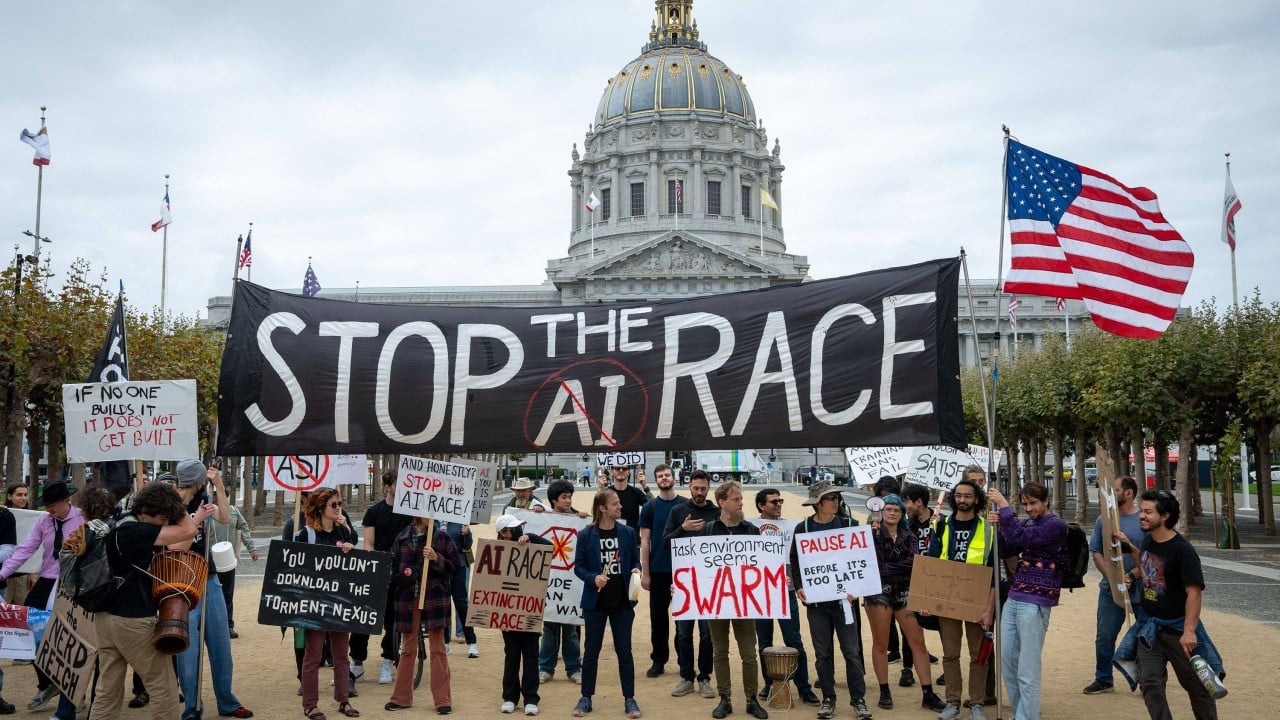
You might wonder why this matters right now. Tech industry leaders like Anthropic CEO Dario Amodei, OpenAI's Sam Altman, and Elon Musk have recently pushed for slowing down development due to safety concerns. Trump isn't buying it. He dismissed those worries on social media, claiming that whoever wins the intelligence race wins the geopolitical chessboard.
Instead of heavy-handed federal rulebooks that lawmakers in Washington keep trying to draft, the plan relies heavily on existing legal frameworks. Trump stated that the current criminal and civil justice systems will handle bad actors rather than bogging down innovation with new bureaucratic red tape.
The Stakes for the Economy and Global Power
Trump predicts that artificial intelligence could account for up to 25 percent of the United States gross domestic product. That is a massive financial footprint. It dwarfs traditional sectors and mirrors the early days of the internet, amplified by a factor of ten.
He wants to keep the US comfortably ahead of competitors like China, especially with high-stakes diplomatic summits and tech roundtables scheduled in Washington involving leaders like Chinese President Xi Jinping, Google CEO Sundar Pichai, and Nvidia CEO Jensen Huang. The message to the global stage is blunt: the United States intends to dominate this sector, not regulate it out of existence.
Critics are already pushing back. Democratic lawmakers like Senator Elizabeth Warren argue that committees and social media announcements don't count as real regulation. They want binding legislation to protect citizens from deepfakes, bias, and potential safety vulnerabilities. But the White House seems entirely uninterested in slowing down code execution or training runs.
What Comes Next for the AI Industry
With venture capitalist David Sacks having previously cycled through a similar advisory role before transitioning to the President's Council of Advisors on Science and Technology, the identity of the incoming czar remains a major talking point. Trump teased the requirement with typical flair, noting that "only high I.Q. individuals need apply."
If you're building products in this space, don't expect a sudden freeze on model training or harsh federal licensing schemes anytime soon. Expect political friction instead. The battle lines are drawn between Silicon Valley safety advocates who want a deliberate pause and a White House determined to run full speed ahead into the next industrial revolution.