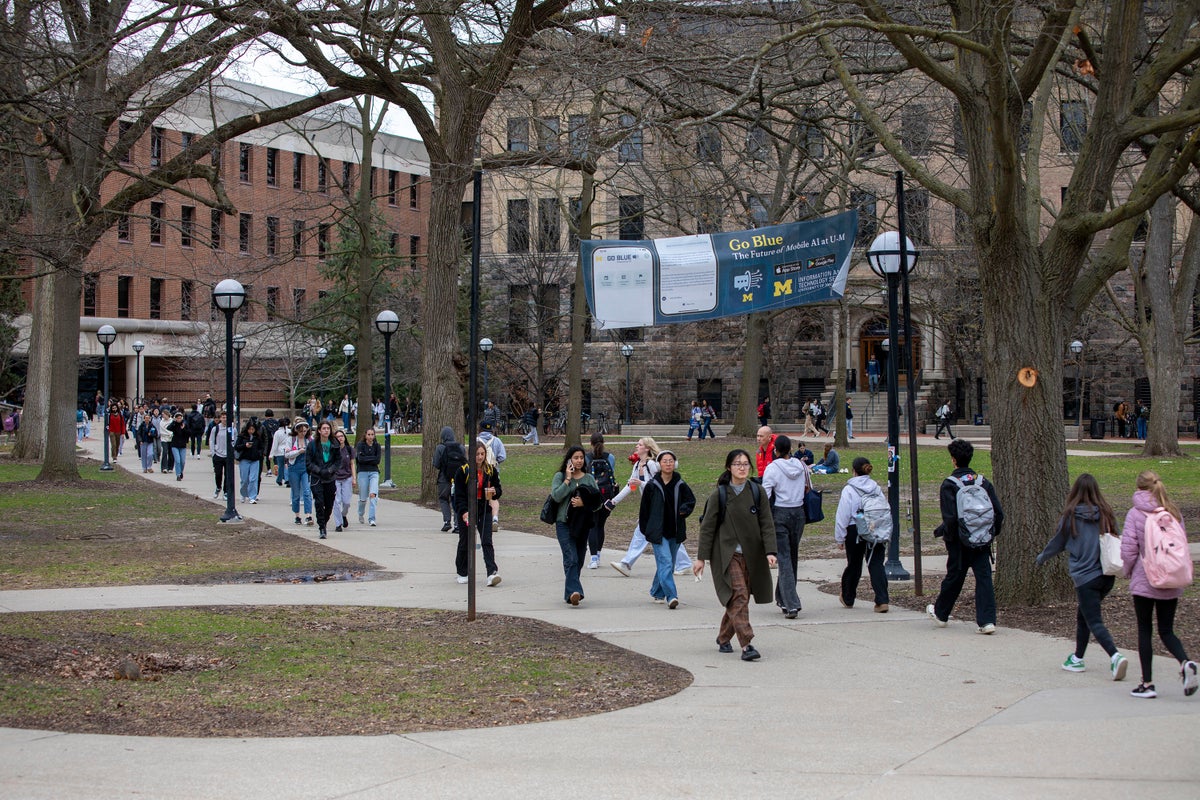
Starting in fall 2027, incoming freshmen in the College of Literature, Science, and the Arts (LSA) at the University of Michigan won't see traditional letter grades on their official transcripts for their first semester. Instead, transcripts will simply show "pass" or "no credit".
Administrators aren't doing this on a whim. They are explicitly trying to curb a relentless mental health crisis and combat the paralyzing perfectionism plaguing college campuses.
You might wonder how students will react. Or whether this coddles young adults heading into a brutal job market. Let's look at what this policy actually means, why elite universities are rushing toward pass-fail systems, and what critics get wrong about the shift.
The Mechanics Behind the Michigan Policy
Let's clear up a common misconception right away. Michigan isn't abandoning academic evaluation altogether. Professors will still assign real letter grades and give detailed feedback behind the scenes.
Students will know how they're performing. They just won't carry the scar tissue of a disastrous first-semester GPA on their permanent external records.
The university retains those internal grades for specific administrative reasons like financial aid, scholarships, athletic eligibility, and internal honors. But for the outside world, that high-stakes GPA pressure vanishes for the first few months.
Why target LSA specifically? It is the largest undergraduate college at Michigan, housing roughly half of the university's first-year students.
Administrators also wisely chose to make the program mandatory for all incoming LSA freshmen rather than optional. If a pass-fail system is strictly opt-in, students often avoid using it out of fear that future employers or graduate schools will view choosing it as a sign of weakness or poor performance. Making it universal removes the stigma instantly.
Why Higher Education Desperately Needs This
Transitioning from high school to a major research university is an absolute shock to the system. You go from being the top student in a small suburban high school to sitting in a lecture hall with four hundred hyper-competitive peers.
The mental math students do on day one is exhausting. One bad midterm in a chemistry weed-out class can send a student into a spiral of anxiety, depression, and self-doubt.
Data from the Healthy Minds Study reveals that while severe depression and anxiety symptoms among college students have dropped slightly from pandemic-era peaks, roughly eighteen percent of students still report experiencing severe depression. Suicidal ideation remains a persistent threat on campuses nationwide.
When every single quiz score feels like a permanent verdict on your future worth, risk-taking dies. Students stick to safe classes where they know they can pull off an easy A. They stop exploring fringe interests or challenging disciplines because they're terrified of hurting their GPA.
Michigan's leadership argues that shielding that first semester gives students a runway. It lets them figure out how to do laundry, manage sleep deprivation, and navigate independent living without a botched organic chemistry exam destroying their career trajectory before October.
The Elite Playbook Isn't New
Michigan isn't blazing an entirely unprecedented trail here. They are borrowing a playbook long used by institutions that specialize in high-pressure environments.
The Massachusetts Institute of Technology (MIT) has used a pass/no-record system for first-semester freshmen since 1968. Caltech and a few select liberal arts colleges utilize similar buffering models for newcomers.
If MIT has managed to produce Nobel laureates and world-class engineers despite giving freshmen a soft landing, Michigan will likely survive letting history and philosophy majors adjust to college life without immediate GPA panic.
Critics online love to claim that universities are turning into daycares. They argue that shielding students from harsh realities sets them up for failure once they hit the real world.
That argument sounds tough and pragmatic, but it ignores how modern work environments actually function. Good managers onboard new hires with training periods and grace periods. They don't fire employees on week three because the learning curve was steep.
The Real Pushback and Grade Inflation
Not everyone in academia is applauding the move. The policy arrives in the middle of a massive national debate over academic standards, grade inflation, and student preparedness.
Data compiled by outlets like MLive showed that over seventy-four percent of undergraduate grades at Michigan were in the A range, compared to just fifty-seven percent a decade prior.
Some critics argue that because grade inflation is already rampant, traditional letter grades had largely lost their meaning anyway. Skeptics suggest that hiding first-semester grades just kicks the can down the road to the second semester, where the panic will eventually set in just as intensely.
At the same time, universities are wrestling with a completely opposite problem in STEM fields. Professors at institutions like UC Berkeley have publicly warned about severe preparation deficits in basic math and science among incoming undergraduates.
When students arrive underprepared, masking their first semester with a pass-fail designation doesn't magically teach them calculus. It merely hides the deficit from external view while faculty scramble to reteach foundational concepts.
What Happens Next for Students
If you are an incoming student or a parent watching these policy shifts, the takeaway is straightforward.
The absence of a transcript GPA for your first term doesn't mean you should treat college like an extended vacation. The internal grades still exist, and employers or graduate programs looking closely at internal transcripts or looking for recommendations will still gauge your trajectory.
Use the breathing room to build sustainable study habits. Form study groups, visit office hours early, and lean into subjects you know nothing about without fear.
University is supposed to stretch your mind, not break your spirit. Giving students a few months to find their footing before the grade ledger locks in is a long-overdue adjustment.