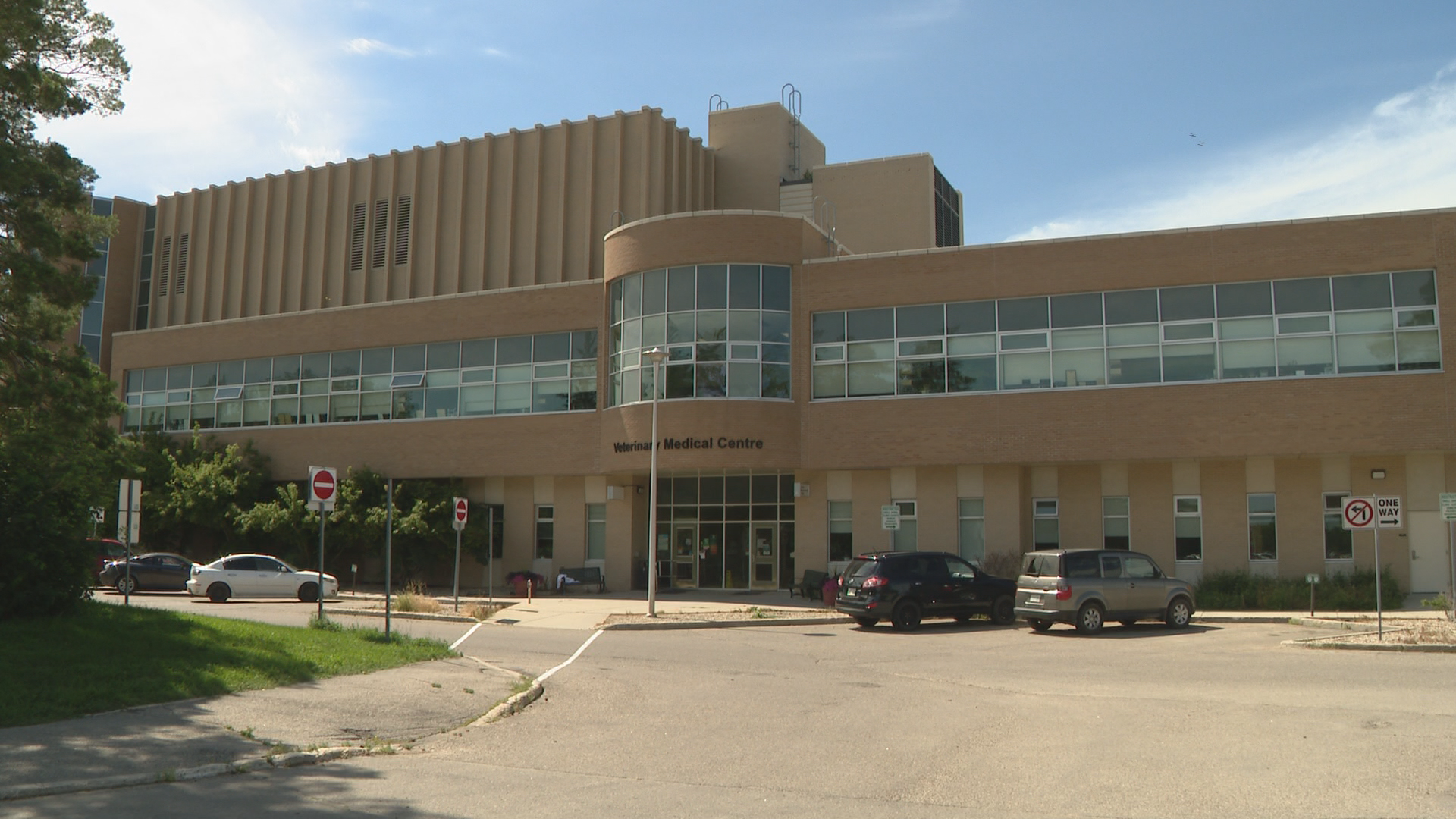
Imagine finding a hawk with a broken wing on the side of the highway, or a deer hit by a car, struggling to survive. Your first instinct is to get it help. For years, people in Saskatchewan knew exactly where to turn. The Western College of Veterinary Medicine (WCVM) at the University of Saskatchewan has been the premier destination for animals in desperate need of emergency, specialized medical care.
But that option is completely gone.
With virtually no warning, the WCVM Veterinary Medical Centre announced a temporary shutdown of its zoo, exotics, and wildlife service, suspending all wildlife admissions. For the nonprofits, volunteers, and veterinary students who keep Saskatchewan's delicate conservation system running, this isn't just an administrative hiccup. It's an absolute disaster.
If you care about local wildlife or the state of veterinary training in Canada, you need to understand what is happening behind the scenes, why the alternative options aren't what they seem, and how this decision leaves injured animals to die.
The Sudden Medical Void
The WCVM Veterinary Medical Centre officially stops accepting wildlife patients, shutting its doors to the most vulnerable creatures in the province. According to the university, this is part of an extensive review process designed to evaluate the future of its wildlife services.
On paper, a "review of services" sounds like responsible administration. In reality, the decision caught the local wildlife community completely off-guard.
Nonprofit organizations that work tirelessly to rescue and rehabilitate animals received no prior consultation. Jan Shadick, the executive director of Living Sky Wildlife Rehabilitation in Saskatoon, didn't hold back her surprise. She made it clear that her organization had no inkling this was coming.
The university even went so far as to list local rehab centers like Living Sky and the Wildlife Rescue Society of Saskatchewan (WRSOS) as alternative care options. But there's a massive, fundamental misunderstanding in that recommendation.
The Difference Between a Hospital and a Walk-In Clinic
To put it bluntly, a wildlife rehabilitation center is not a veterinary hospital.
Shadick explained the distinction perfectly. Rehab centers are basically the equivalent of a walk-in clinic. They can feed orphaned animals, bandage minor wounds, and give animals a safe space to recuperate.
They don't have sterile surgical suites. They don't have advanced diagnostic imaging, orthopedic specialists, or complex anesthesia protocols.
When a rehab center gets an animal with a shattered leg or deep internal trauma, they can't fix it themselves. They rely on the WCVM to perform the surgeries and provide the intense medical care needed to save that animal’s life.
With the university suspending its services, there is nowhere left to take these severely injured animals. Without professional, high-level veterinary intervention, many of them will simply have to be euthanized. Or worse, they will face a slow, painful death in the wild.
The Human Toll on Students and Volunteers
It's not just the animals that are going to suffer because of this decision. The human impact is massive, stretching across two major groups.
Stretched-Thin Volunteers
Local rescue groups operate on shoe-string budgets, funded almost entirely by public donations. They rely heavily on volunteers to transport animals, clean cages, and coordinate rescues.
Now, these nonprofits face a terrifying double-whammy:
- An immediate, overwhelming influx of injured animals that they don't have the space or funds to feed.
- The psychological trauma of having to turn animals away or watch them die because there are no surgical options left.
It is an incredibly heavy emotional burden for volunteers who dedicate their lives to protecting these animals.
Veterinary Students Left in the Dark
The WCVM is one of the top veterinary colleges in Canada. Students choose this school specifically to learn from world-class specialists and get hands-on experience treating exotic species and wild animals.
By pulling the plug on the wildlife service, the university is stripping its own students of vital educational opportunities.
Students aren't taking this sitting down. Makayla Gemin, a third-year veterinary student at the college, launched an online petition urging the administration to reconsider. The petition is gaining rapid momentum, reflecting deep anger and disappointment among the student body. They feel they're paying top-tier tuition for a downgraded education.
What You Can Do Right Now
This situation is incredibly frustrating, but throwing your hands up in defeat won't help. If you want to support Saskatchewan's wildlife and the people who protect them, here are the most effective, practical steps you can take today.
1. Support the Nonprofits Directly
Since groups like Living Sky Wildlife Rehabilitation and WRSOS are going to bear the brunt of this shutdown, they need financial help more than ever. Even a small donation helps cover the cost of specialized food, medication, and transport.
- Donate: Visited their websites to set up a one-time or monthly donation.
- Volunteer: If you live in the Saskatoon area, offer your time to help feed animals or clean enclosures.
- Transport: Sign up as a volunteer driver to help move animals from rural areas to rehab facilities.
2. Sign and Share the Petition
Make your voice heard. Add your name to the student-led petition calling on the WCVM dean and university administration to reinstate the wildlife clinic. Raising public pressure is often the only way to get large academic institutions to change course.
3. Contact the University Administration
Write a polite but firm email to the Dean of the Western College of Veterinary Medicine. Let them know that as a community member, you value wildlife conservation and want to see the university maintain its commitment to public service and comprehensive veterinary education.