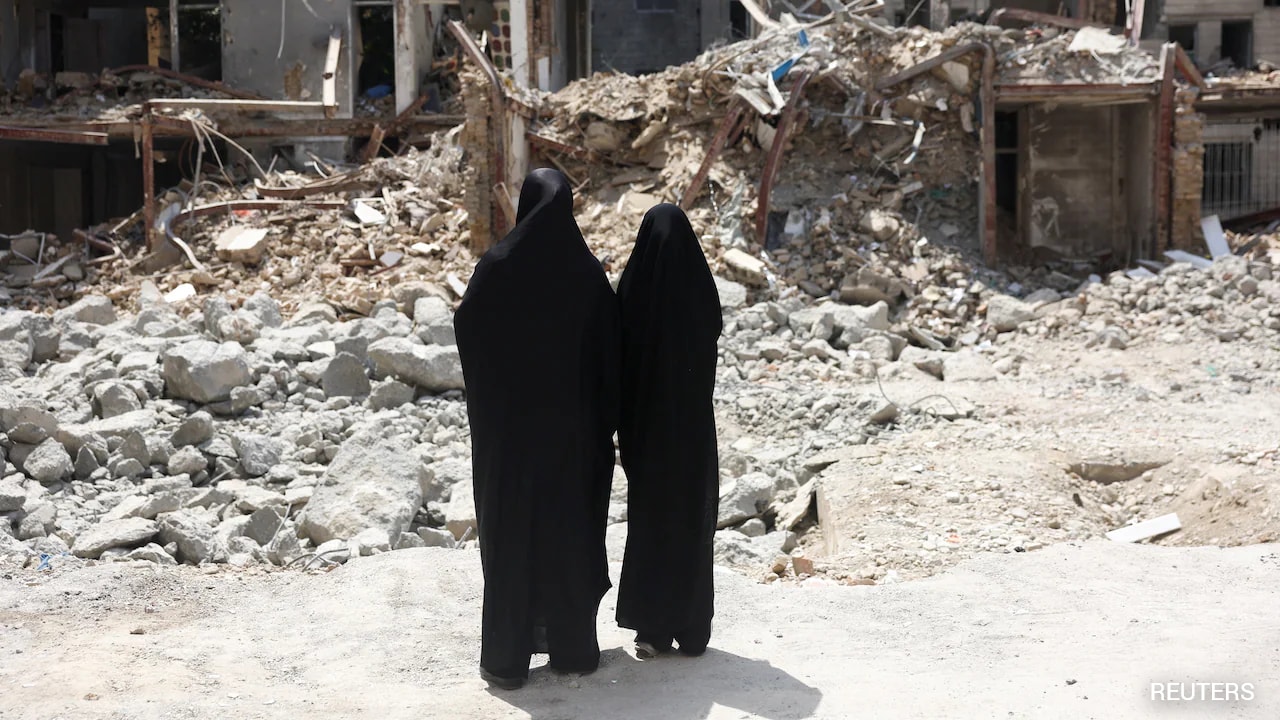
Six months after U.S. and Israeli forces launched direct strikes that killed Iran's supreme leader and maimed his son, the conflict hasn't ended. It has flatlined. Washington promised a swift breakdown of the clerical regime through military force and economic strangulation. Instead, both sides are trapped in a grinding, high-stakes standoff where neither option leads to a clean victory.
The administration in Washington is betting everything on a fresh wave of economic warfare. Treasury Secretary Scott Bessent rolled out aggressive new sanctions, framing the move with dramatic military analogies. But real-world foreign policy rarely listens to rhetoric. Tehran has spent decades perfecting the art of sanction survival. Iranian officials know that Donald Trump faces a difficult choice. To make the current economic blockade truly work, Washington has to aggressively punish Beijing and New Delhi for buying Iranian oil.
Will the White House actually pick a trade fight with China to choke off Tehran? Don't bet on it.
The Blockade Versus The Playbook
The core of the current U.S. strategy relies on a strict naval blockade to cut off Iran's oil exports and starve the government of hard currency. Analysts point out that while the blockade causes immediate pain, it completely misunderstands how Tehran operates.
Iran isn't North Korea, though the comparison gets tossed around a lot. It has massive industrial depth, decades of black-market smuggling infrastructure, and critical economic lifelines in Asia. Iranian leaders aren't going to roll over because inflation is soaring past 60 percent or because consumer food prices have doubled. They have survived worse domestic shocks by relying on a familiar, brutal tool: internal security forces.
When economic grievances sparked nationwide protests back in January, the Revolutionary Guards and the Basij militia crushed the demonstrations swiftly. The recent appointment of hardliner Hossein Taeb to head the Basij shows that Tehran's leadership expects more unrest and is fully prepared to shoot their way through it.
Why the Gulf States Are Sweating
Nobody is more anxious about this stalemate than Iran's neighbors across the Persian Gulf. Saudi Arabia and smaller Gulf states want the conflict contained, but they are terrified of what happens next.
Iran has effectively choked traffic through the Strait of Hormuz, driving global energy markets into a frenzy. Tehran's strategy mimics the playbook used by its Houthi allies in the Red Sea. They don't need to win a naval battle against the U.S. Navy. They just need to make the cost of doing business in the Middle East unbearable for everyone else.
If economic pressure gets too high, Tehran won't surrender. They will turn up the heat on regional infrastructure. Oil facilities, shipping lanes, and ports in Gulf states become natural targets for retaliation. Gulf leaders know that pushing Iran into a corner puts targets squarely on their own backs.
The Trap of Maximum Pressure
Washington wants Iran to surrender its geopolitical leverage and walk away from the Strait of Hormuz without offering any real diplomatic wins in return. Tehran wants the naval blockade dropped without looking like they lost the war.
That creates a permanent diplomatic deadlock.
Sanctions rarely force governments to collapse from within when those regimes view survival as an absolute necessity. Instead of a swift endgame, the U.S.-Iran conflict has morphed into a permanent migraine for foreign policy planners. The military options have maxed out, the economic measures are hitting a brick wall of foreign indifference, and the regional fallout is spreading.
The war didn't end with a decisive breakthrough. It just settled into a costly, miserable routine.