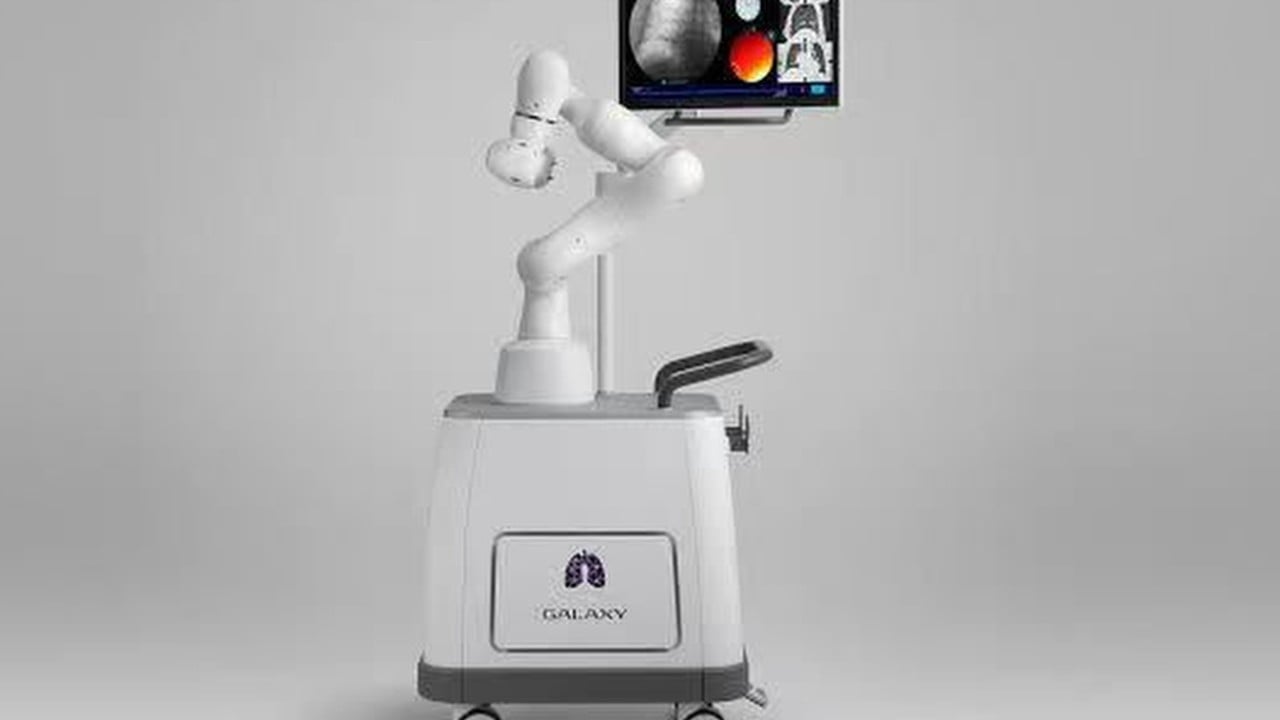
If you think medical technology innovations only care about Silicon Valley or Wall Street, you're missing where the real money and clinical demand are heading. SoftBank-backed medical device maker Noah Medical is setting its sights on a Hong Kong initial public offering to fuel an aggressive expansion into mainland China, and the strategic rationale behind this move tells you everything about where the healthcare sector is shifting.
Founder Zhang Jian recently confirmed that the California-headquartered firm aims to raise over US$100 million through a listing that could materialize as early as next year. When a company with 90 percent of its current revenue locked into the United States decides to chase Asian capital markets so overtly, it isn't just about grabbing extra cash. It's about securing a foothold in a market that handles a massive share of the world's most critical oncological cases.
The China Calculus for Advanced Surgical Tech
Let's look at the numbers. China accounts for roughly 40 percent of all global lung cancer diagnoses, making it the premier target market for diagnostic tools like Noah Medical's Galaxy System, which handles peripheral lung nodule biopsies. Yet, fewer than 8 percent of robotic-assisted procedures in the country happen through these advanced platforms.
The gap between clinical need and actual technological adoption represents a goldmine for foreign medical device firms willing to jump through regulatory hoops. After securing clearance from China's National Medical Products Administration, companies like Noah Medical aren't just selling hardware to elite facilities like the Prince of Wales Hospital in Hong Kong or target institutions on the mainland such as Sir Run Run Shaw Hospital. They're trying to establish long-term clinical dependencies in hospital networks that are rapidly modernizing.
Why Hong Kong Remains the Go-To Financial Bridge
Choosing Hong Kong over domestic US exchanges or mainland venues isn't an accident. Western institutional backers who pumped over $300 million into Noah Medical since its 2014 inception—including prominent venture funds and heavy hitters like SoftBank—still hold significant equity stakes.
A Hong Kong listing provides a clean structural bridge. It maintains the offshore corporate governance standards that Western investors demand while opening the door wide for regional and mainland capital. Cross-border technology regulations are tightening by the month, and a dual-compliant financial nexus gives foreign medtech platforms the legal armor they need to operate across jurisdictions without triggering severe regulatory pushback.
Navigating a Flooded Market
Entering the mainland hospital ecosystem sounds lucrative on paper, but competition is fierce. Local regulatory authorities have aggressively accelerated approvals for domestically manufactured surgical robots. At least half a dozen local competitors are already cleared for various endoscopic and orthopedic procedures, undercutting foreign pricing models and building deep ties with regional procurement officers.
Furthermore, giants like Intuitive Surgical have spent decades embedding their da Vinci systems into hospital workflows, though they still face room for growth with roughly 300 total installations across mainland China. Noah Medical's Galaxy System secured its NMPA approval late last year, giving it a narrow window to convert regulatory validation into active hospital contracts before the market becomes saturated with cheaper domestic alternatives.
What to Watch As the Filing Approaches
If you're tracking medtech investments, don't just look at the headline valuation numbers when the official IPO prospectus drops. Pay close attention to unit economics, hospital installation velocity, and actual utilization rates per system. Selling a multi-million-dollar robot to a prestigious medical center is one thing; getting surgical teams to use it daily instead of traditional methods is where businesses actually survive or bleed cash.
The playbook is simple. Secure the international capital, clear the local regulatory hurdles, and convince hospital administrators that your robotic platform is indispensable. If Noah Medical pulls this off, expect a wave of other venture-backed hardware startups to copy the exact same Hong Kong listing blueprint before the decade ends.


