You expect criminals to invent elaborate alibis. You don't usually expect them to claim they committed a bombing as a favor.
Italian businessman Valter Lavitola just delivered one of the strangest confessions in recent judicial history. Sitting in Rome's Rebibbia prison during a grueling five-hour interrogation, Lavitola admitted he ordered the October 2025 bomb attack targeting Sigfrido Ranucci, the prominent host of the state broadcaster Rai investigative show Report.
His excuse? He wanted to boost Ranucci's security detail. According to his defense team, Lavitola insisted he acted "for Ranucci's good" because the journalist was facing constant threats.
It sounds absurd. It gets worse.
The Anatomy of a Bizarre Friendship
To understand how a businessman orchestrates an explosion outside his companion's home, you have to look at their history. Lavitola and Ranucci weren't bitter enemies. They were close associates. They met back in 2019 after Ranucci investigated Lavitola, a former publisher and entrepreneur with a history of heavy legal troubles, including a conviction for extorting former prime minister Silvio Berlusconi.
Despite that rocky start, a strange bond formed. They shared meals and maintained regular contact. Ranucci later described the dynamic to Italian media as a form of "Stockholm syndrome".
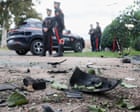
Then came the night of October 16, 2025. A rudimentary yet powerful explosive device detonated outside Ranucci's home in Pomezia, just south of Rome. The blast pulverized two vehicles—one belonging to Ranucci and another owned by his daughter. Ranucci had just stepped inside his house minutes prior.
Investigators initially suspected organized crime. Ranucci spends his career digging into mafia syndicates and government corruption, meaning enemies come standard with the job. He has lived under police protection since 2021.
Unraveling the Motive
When police finally rounded up four alleged fixers near Naples in late June and subsequently closed in on Lavitola, prosecutors pointed toward a darker political plot. Wiretaps and investigative files suggested Lavitola hoped to skyrocket Ranucci's public profile to launch a future political career—one that Lavitola might personally profit from. Intercepts even caught Lavitola reportedly telling the journalist, "you will be prime minister in two years".
Lavitola rejected that theory entirely during his confession. He claimed his original instruction to the hired hands was much tamer—he supposedly asked them to just shoot a few bullets into the wall of the villa. When the crew used a bomb instead, Lavitola apparently decided to roll with it, viewing the explosion as a useful demonstration.
His lawyer argued the goal was strictly protective. The magistrate didn't buy it, denying requests for house arrest and keeping Lavitola locked up due to fears of flight and tampering with evidence.
The Wider Fallout
Ranucci's camp isn't laughing. Roberto De Vita, the journalist's lawyer, called the confession part of a "delirious theater of madness". He noted that Ranucci stands as a victim on multiple fronts: targeted by violence, betrayed by a trusted confidant, and subsequently dragged through political smear campaigns by critics trying to claim he faked the attack himself.
The fallout stretches far beyond a courtroom. Italy's media landscape is currently tearing itself apart over the affair. Right-wing politicians have seized on the chaos to demand the suspension of Report, while Ranucci fights back against institutional pressure, pointing out the historic perils faced by independent Italian journalists who push too hard against power.
You can't make this stuff up. Reality in Rome frequently beats fiction.
The investigation continues as prosecutors comb through seized phones and hunt for remaining fugitives. Lavitola sits behind bars, waiting for an appeal, while Ranucci stays on air, reminding the public that transparency remains a dangerous business in Italy.