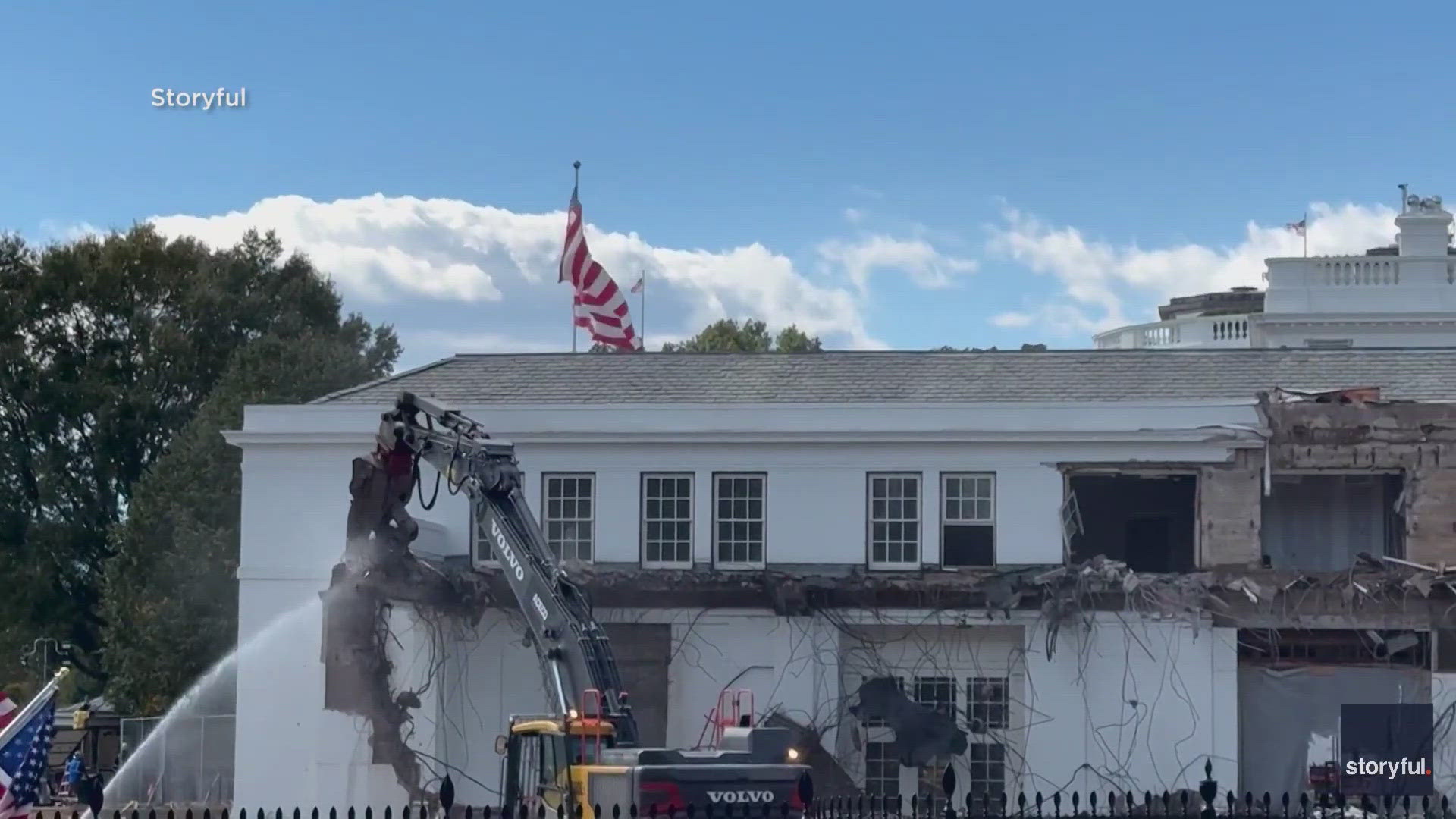
When heavy machinery and structural upgrades disrupt the nation's capital, safety protocols sometimes fall apart in unexpected ways. Federal investigators revealed that ongoing White House construction created the radio failures that nearly put Donald Trump's helicopter on a collision course with a commercial jet. It's a sobering reminder of how mundane infrastructure projects can trigger high-stakes aviation hazards.
If you've been wondering how Marine One and an Envoy Air passenger plane ended up dangerously close to each other over Washington, the culprit wasn't pilot error. It came down to blocked signals, shifting takeoff zones, and backup communication plans that completely failed when it mattered most.
The Breakdown of the Three Minute Warning
Every presidential helicopter departure relies on a strict, long-standing protocol. The crew of Marine One is supposed to give air traffic controllers at Ronald Reagan Washington National Airport a three-minute warning before lifting off. This allows the tower to halt regular departures and arrivals, keeping the airspace completely clear.
On August 4, that critical radio call never reached the tower. According to a preliminary report from the National Transportation Safety Board, the Marine One pilots tried twice to transmit their upcoming takeoff notice. The radio recordings showed the pilots attempting to relay the message, but the control tower heard absolute silence.
Because the tower received no warning, controllers cleared an Envoy Air passenger jet to take off for Florida just as Marine One lifted into the air from the Ellipse—the park south of the White House where helicopter flights were temporarily relocated due to ongoing grounds construction.
Why the Radios Failed
Ground zero for the communication breakdown was the White House itself. Since mid-July, construction for a new helipad and other major property updates forced Marine One to shift its launch spot away from the traditional South Lawn.
That shift ruined the line of sight between the airport's ground radio receiver and the president's helicopter. Technicians realized too late that the new launch footprint created massive radio dead zones.
Air traffic controllers and Marine One pilots had actually met just days prior on July 30 to discuss spotty radio transmissions. They hatched a backup plan to route warnings through a helicopter facility at Joint Base Anacostia-Bolling if direct communication failed. On August 4, that backup plan failed too.
The Close Encounter in the Air
The commercial jet and the presidential helicopter found themselves airborne at the same time in crowded airspace. At their closest point, the two aircraft were separated by just over 0.8 miles laterally and roughly 700 feet vertically—well below standard airport safety buffers.
The Envoy Air crew never saw Marine One, though their collision avoidance system flashed an alert right after takeoff. Meanwhile, the Marine One pilots spotted the passenger plane, paused their trajectory, and waited until the jet climbed safely out of the area. Officials stressed that the president was never directly harmed, but the margin for error was razor-thin.
This near-miss stung all the more because it occurred under the shadow of tighter aviation rules implemented after a catastrophic January 2025 mid-air collision over the capital that killed 67 people.
Fixing the Blind Spots
The Federal Aviation Administration didn't wait around for the final investigation to act. Technicians relocated the problematic radio antenna to the top of the tower at Reagan National Airport to restore a clear signal path. Subsequent tests proved the fix worked, though minor communication hiccups popped up briefly in later flights before clearing up.
Aviation safety experts point out that the root cause was ignored for weeks because authorities treated symptoms rather than checking the physical line-of-sight obstruction caused by ongoing White House renovations. When you alter the geography of the most heavily monitored estate in the world, the invisible electronic pathways need to change right along with it.
Check out this White House construction radio report to see a breakdown of the communication breakdown.
http://googleusercontent.com/youtube_content/1