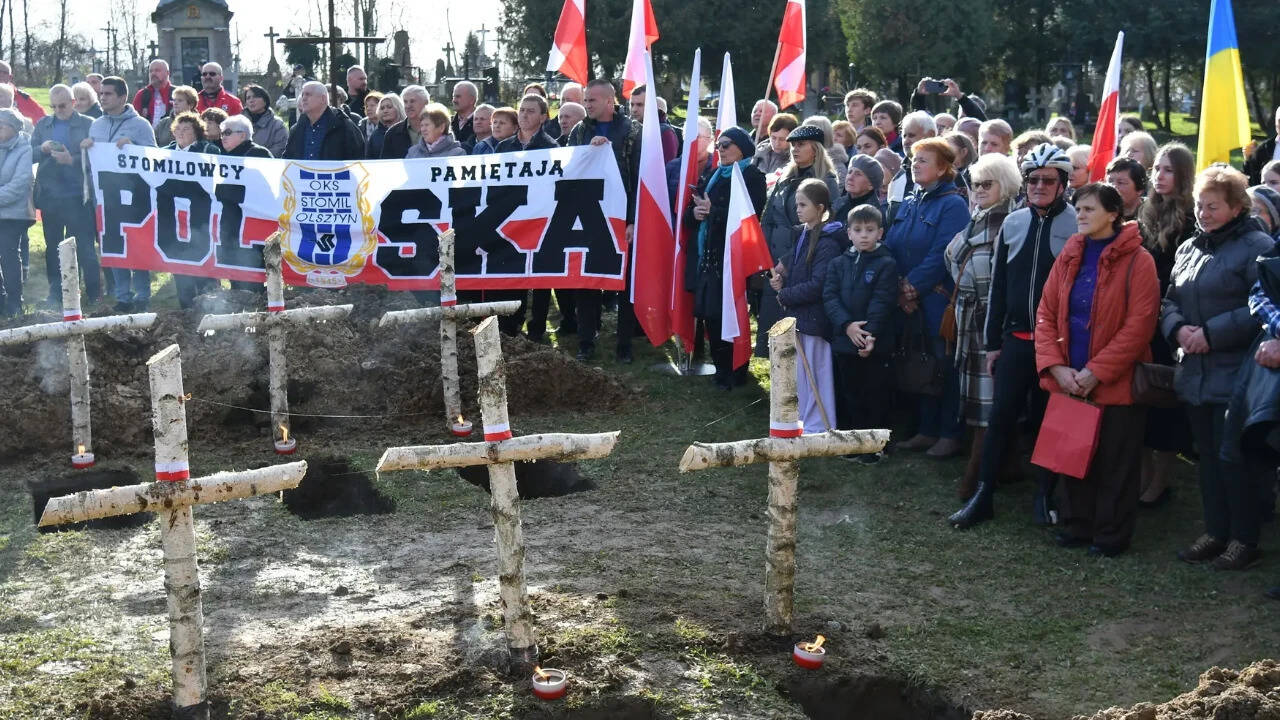
History rarely stays quiet when modern borders are burning. Right now, a brutal chapter from the middle of the twentieth century is being pulled back into the spotlight to drive a wedge between two countries that desperately need to stand together. If you look closely at social media feeds in Warsaw and Kyiv, you will notice a sharp spike in angry arguments about old ghosts. This is not an accident of organic public debate. It is a calculated digital strategy, and the fingerprints belong entirely to Moscow.
The Weight of the Past in Volhynia
To understand why modern tensions flare so easily, you have to look back at the horrific events that unfolded between 1943 and 1945. During the Nazi occupation of the region, units of the Ukrainian Insurgent Army, known as the UPA, carried out a systematic campaign of ethnic cleansing against the Polish minority in Volhynia and Eastern Galicia.
Conservative estimates point to roughly 100,000 Polish civilians slaughtered in brutal fashion. Thousands of Ukrainians were subsequently killed in retaliatory actions by Polish underground forces. For decades, this trauma remained an open wound. Poland officially classifies the massacres as a genocide, while parts of Ukraine have historically struggled to reconcile these dark actions with the legacy of nationalist groups that also fought against Soviet occupation.
These are real historical grievances. They involve real blood, real victims, and real sorrow. But recognizing that the history is authentic does not mean the current wave of online outrage is happening naturally.
How Digital Amplification Works
Foreign intelligence operations don't always need to invent fake history from scratch. It is far more effective to take a genuine, festering historical trauma and pour digital gasoline on it.
Recent investigations by security analysts and digital ministries in Poland show a massive surge in anti-Ukrainian messaging across platforms like X, Facebook, and Telegram. Research from institutions like the Polish Institute of International Affairs revealed that hostile online narratives concerning the wartime massacres jumped by more than 250 percent following specific political friction points between Warsaw and Kyiv.
Bots and coordinated accounts jump into the mix, artificially boosting toxic commentary. They make fringe viewpoints look like mainstream consensus. They take a diplomatic disagreement over historical honors or memorial sites and frame it as an existential betrayal. The goal is simple: erode public sympathy in Poland for the refugees they are hosting and the military supplies they are sending to the front lines.
The Trap of Selective Memory
When you fall for online outrage about events that happened eighty years ago, you walk straight into a trap designed by modern propagandists. Public opinion polls in Poland show that constant exposure to these amplified historical arguments directly impacts everyday political support. A notable percentage of citizens admit their views on Ukrainian refugees have soured following renewed media storms over the wartime killings.
This is precisely what external actors want. They want citizens in allied nations pointing fingers at each other over the graves of the past so they stop paying attention to the artillery shells falling in the present. Honoring history requires honest scholarship and solemn remembrance, not weaponizing corpses to score geopolitical points on social media.
Recognize the manipulation when you see it online. Dig past the inflammatory headlines, look at who benefits when allies fight, and refuse to let old demons dictate modern survival.
WWII Volhynia tragedy and its lasting impact on Polish-Ukrainian relations: analysis
This video provides an in-depth analytical breakdown of the historical Volhynia tragedy and how these sensitive World War II memories continue to impact modern diplomatic relations between Poland and Ukraine.
http://googleusercontent.com/youtube_content/1