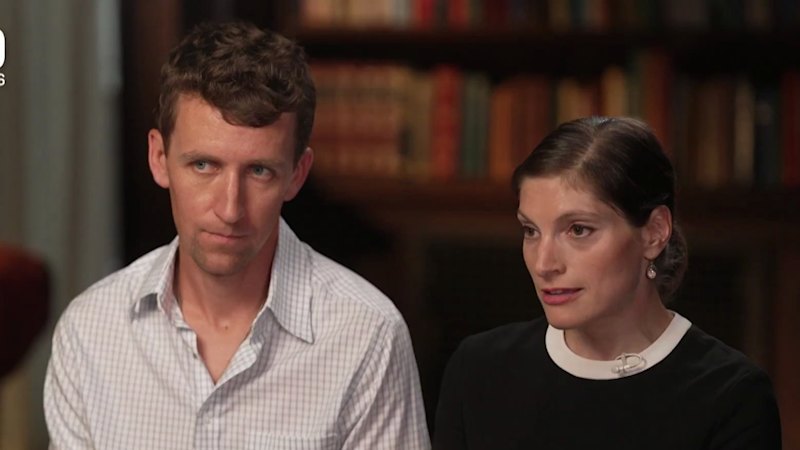
Grief doesn't fit neatly into a courtroom timeline. When a jury deadlocked on a mistrial for Lindsay Clancy—the Massachusetts mother whose defense argued severe postpartum psychosis drove her to strangle her three young children—the public split down the middle. One side saw a monster. The other saw a severe medical tragedy. But the person caught dead-center in the noise, Patrick Clancy, chose a path few outside his shoes could ever understand: forgiveness.
Breaking his silence in a televised interview on CBS News' 60 Minutes, the grieving father laid bare the raw reality of living in the aftermath of total destruction. He didn't rant against the legal system. He didn't point fingers at the jurors who couldn't reach a unanimous verdict. Instead, he forced us to look at what happens when severe mental illness shatters a family and the internet rushes in to sensationalize the wreckage.
The Real Cost of Postpartum Psychosis and Public Ignorance
People love simple narratives. They want clean lines between good and evil, victim and perpetrator. When headlines flash terms like "killer mom," social media algorithms reward outrage. Trolls and armchair detectives cook up wild conspiracy theories, pointing fingers at Patrick himself or dismissing a well-documented medical emergency.
Patrick called out those online conspiracy theories for what they are: a toxic distraction.
"It’s deeply harmful to the legacy of my children," he said. "It is a huge distraction from what really matters here, which is perinatal mental health."
He isn't wrong. Perinatal mood and anxiety disorders, including postpartum psychosis, are terrifyingly misunderstood medical crises. They aren't just "baby blues" or ordinary depression. They involve severe delusions, hallucinations, and a complete detachment from reality. When a brain breaks under that kind of chemical siege, the person suffering is trapped inside a nightmare entirely beyond their control.
Yet, our criminal justice system struggles to reconcile severe medical psychosis with violent acts. Prosecutors argued that Lindsay knew what she was doing. Meanwhile, 11 out of 12 jurors on the panel were ready to acquit her of criminal responsibility based on overwhelming evidence of her mental state. That lone holdout triggered a mistrial, leaving the case in legal limbo and dragging the family back into uncertainty.
What Living Through the Aftermath Actually Looks Like
We rarely talk about the physical and psychological toll taken on survivors of domestic tragedies. Patrick's survival wasn't a given. He admitted that there was a period where he didn't expect to see his 35th birthday, and honestly, he was completely fine with that.
The trauma bled into every corner of his life. During the trial, attorneys played the harrowing 911 call he made after discovering his children's bodies in the basement. Hearing his own screams echoed back in a court of law triggered a severe panic attack on the stand.
People ask how someone could forgive the person who killed their children. Patrick’s answer cuts straight through the noise: "I believed that it was her mental illness that caused that."
He isn't defending the horror of what happened. He's separating the disease from the person he married. He remembers the mother who loved their kids, not the psychotic break that hijacked her mind. That distinction is precisely what the legal system, and society at large, fails to grasp. We want vengeance because it feels easier than accepting that human biology can fail so catastrophically.
Moving Forward From the Legal Limbo
The Plymouth County district attorney hasn't yet announced whether they will push for a retrial. No matter what happens next legally, Lindsay Clancy faces years of institutional confinement or psychiatric treatment. There is no happy ending here. There is only survival.
Patrick has rebuilt parts of his life, marrying Dr. Rachel Danis, who described him as a deeply selfless partner. But the weight remains. When asked if he felt angry with himself or felt like he failed, his response was brutally honest.
"I think I did the best I could with what I had at the time," he said. "And I live with the outcome. I live with it every day."
If you or someone you know is struggling with mental health, postpartum distress, or overwhelming grief, don't wait for a breaking point. Reach out to local support lines, trusted medical professionals, or emergency services immediately. Real strength means admitting when the weight is too heavy to carry alone.