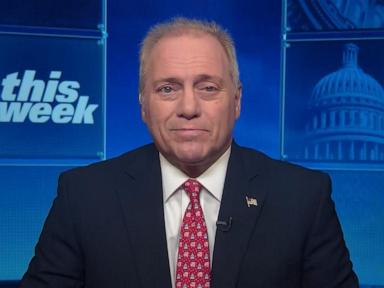
House Majority Leader Steve Scalise recently shrugged off questions regarding President Donald Trump's sudden ban on multiple news outlets from the White House, claiming he was entirely in the dark. Appearing on television, Scalise offered a classic non-answer when pressed about the administration barring journalists from CNN, MS Now, and Politico. He didn't defend the move, nor did he condemn it. He just washed his hands of the whole situation.
If you look past the standard political pivot, his response exposes a much deeper fracture inside the Republican party. Top congressional leaders are increasingly forced to choose between defending erratic executive orders or pretending they simply haven't seen the news. You have to wonder how a high-ranking legislative official can remain genuinely clueless about a major constitutional clash happening right next door. The reality is simple: they aren't clueless. They're just dodging.
The Anatomy of a White House Press Ban
The controversy kicked off when the president took to Truth Social to announce that credentialed reporters from CNN, MS Now, and Politico were immediately banned from the White House grounds. The stated reason boiled down to familiar grievances over negative coverage and what the administration labeled as fiction. Soon after, Secret Service officers actually began disabling hard press badges and turning reporters away at the gate.
Legal challenges arrived almost immediately. Constitutional scholars and the White House Correspondents' Association pointed out an obvious truth. The First Amendment doesn't vanish just because a politician dislikes a media outlet's editorial stance. Yet, the administration doubled down, suggesting that other news organizations could face the exact same fate if they continued publishing critical stories.
When Scalise was asked if this policy violated basic constitutional rights, he sidestepped the question entirely. He pointed out that House leadership welcomes tough questions from everyone, noting that the president himself often takes hostile inquiries. But when pushed on why the executive branch chose to lock the doors on specific journalists, Scalise offered his infamous defense. He didn't know why it happened.
Why Congressional Leadership is Shrugging
Politicians like Scalise play a very specific game of strategic ignorance. Standing up to a popular and volatile executive brings immediate political consequences within the party base. At the same time, defending an indefensible restriction on the press creates a massive legal and public relations nightmare.
By claiming ignorance, Scalise tries to thread an impossible needle. He keeps the peace with the executive branch while avoiding a direct endorsement of a policy that even the administration admits might not survive a federal court challenge. It is an act of political self-preservation.
Think about how this dynamic plays out behind closed doors on Capitol Hill. Rank-and-file lawmakers are tired of answering for executive decisions they had no hand in crafting. When the White House drops a policy via social media without consulting congressional allies, it leaves legislative leaders scrambling. They are left holding the bag, forced to defend actions they didn't authorize or pretend they haven't read the headlines.
The Cost of Shutting Out Independent Journalism
Restricting access to the seat of executive power hurts more than just the targeted news organizations. It fundamentally alters how information flows to the public. When an administration starts picking and choosing which reporters can walk onto campus, accountability evaporates.
Past clashes over press credentials usually followed a messy legal and procedural path. During his first term, the administration tried a similar tactic with a prominent correspondent, only to watch a federal judge reverse the decision. This latest blanket ban on multiple outlets represents a massive escalation. It signals a willingness to bypass traditional norms entirely, relying on executive fiat rather than established protocols.
You can trace a straight line from these escalating media restrictions to a broader erosion of institutional norms in Washington. When leaders in Congress respond to authoritarian tactics with a casual shrug, they normalize behavior that weakens democratic checks and balances.
What Happens Next
The courts will eventually have to decide whether a president can legally bar specific journalists from federal property based on coverage. Legal experts give the administration's ban a rocky outlook, noting that previous attempts to strip press passes failed under constitutional scrutiny.
Meanwhile, the banned outlets are preparing for a protracted legal battle, and other media organizations are watching their own backs to see who might be next on the chopping block.
Don't expect congressional leaders to step up and fix this. As long as pretending not to know keeps them out of the crossfire, they will keep looking the other way. The burden of defending open access now falls entirely on the courts and the journalists locked outside the gates.