Imagine taking a family vacation to Washington, D.C., snapping photos in front of historic landmarks, and suddenly waking up in emergency surgery with a bullet in your abdomen. That is not a nightmare scenario made up for a movie. It is the reality for Pfc. Benjamin Del Real Jr., a 25-year-old active-duty U.S. Army soldier from Salina, Kansas.
On May 23, 2026, Del Real was strolling past the White House with his father and sister, heading toward dinner after spending hours at the National Archives and Arlington National Cemetery. Within seconds, an armed gunman opened fire on a nearby Secret Service outpost. Secret Service agents responded immediately with a spray of return fire. In the chaos, Del Real threw his father to the pavement and pulled him behind a concrete barrier. He saved his father's life, but he could not dodge the stray bullet that tore into his stomach.
Now, Del Real and his attorney, Joseph Murphy of Clifford Law Offices, have filed a formal $25 million personal injury claim against the federal government. The lawsuit contends that federal agents failed in their basic duty to safeguard innocent bystanders while engaging an attacker.
This case raises tough legal and tactical questions. Where does federal immunity end when innocent citizens get caught in law enforcement crossfire?
What Happened Outside the White House Security Booth
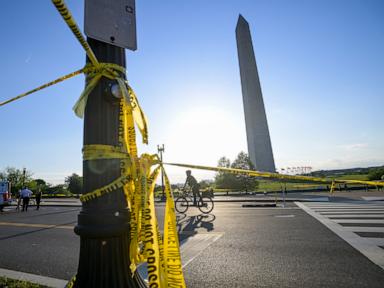
The shooting broke out around 6:00 p.m. near the intersection of 17th Street and Pennsylvania Avenue NW. Del Real's family was roughly 20 yards away from a Secret Service outpost when an armed individual drew a firearm and started shooting directly at the guards.
Agents stationed at the post returned fire. The suspect was fatally shot during the encounter. But as agents unleashed multiple rounds across a crowded city intersection, bullets ricocheted into surrounding property and toward unarmed tourists. One bullet struck a window down the block, while another struck Del Real in his midsection.
Del Real underwent emergency surgery at George Washington University Hospital. Surgeons operated twice within 48 hours to extract the projectile and repair extensive internal damage. Doctors had to remove portions of his small intestine and colon. He faces another surgery next month.
His sister, Sara Del Real, recalled watching her brother bleed on the sidewalk as the scariest moment of her life.
The $25 Million Lawsuit Under the Federal Tort Claims Act
Del Real filed his notice under the Federal Tort Claims Act, which serves as the primary legal mechanism for civilians seeking damages for injuries caused by federal employee negligence.
Federal law enforcement agencies normally enjoy broad sovereign immunity shielding them from civil liability during active combat or security responses. However, that protection is not absolute. The Federal Tort Claims Act allows citizens to hold federal entities accountable when officer actions cross the line into clear negligence.
The legal strategy built by Del Real's legal team rests on three main points.
- Negligent marksmanship and tactical awareness: The shooter was positioned with his back to Del Real's family. Agents fired repeatedly into a crowded public corridor without adequate backdrop protection.
- Failure to warn or clear the zone: Bystanders received zero tactical warning or direction from agents before the gunfire erupted.
- Destruction of a career: As an active soldier, Del Real's permanent physical impairment puts his military service in jeopardy.
Attorney Joseph Murphy emphasized that protecting public officials should not come at the expense of reckless disregard for innocent lives nearby. "Ben and his family had every right to be there," Murphy noted. "They had no body armor, no protection, and no warning."
Ballistics and the Question of Accountability
A central dispute in the case centers on who fired the bullet that struck Del Real.
Secret Service spokespersons have declined to confirm whether an agent's round wounded the soldier. Metropolitan Police Department investigators state that official ballistic reports remain pending. However, initial investigative reports from local news sources indicate law enforcement officials privately determined that Secret Service return fire struck Del Real.
Del Real's legal counsel has formally requested the preservation of all digital evidence, physical shell casings, firearms, and surveillance footage from nearby government installations.
Without clear ballistics transparency, public trust in federal law enforcement operations around high-security zones suffers.
What This Case Means for Federal Law Enforcement Liability
Suing a federal protection agency is an uphill battle. Courts routinely defer to officer judgment during life-or-death situations where splits of a second dictate survival.
If this claim moves forward to trial, it could establish a critical legal precedent regarding law enforcement accountability in high-density urban areas.
To track how personal injury claims against federal agencies unfold, keep these steps in mind:
- Monitor FTCA Administrative Response Windows: Federal agencies have six months to review administrative claims before a formal federal lawsuit is filed in court.
- Review Public Ballistic Filings: Watch for Metropolitan Police Department investigative updates regarding bullet matches and firearm forensics.
- Track Legislative Oversight Discussions: Congressional committees frequently review active shooting protocols when collateral civilian injuries occur outside secure federal perimeters.
This video provides direct news coverage and background on the White House shooting incident involving the wounded soldier: Secret Service White House Shooting Overview.